

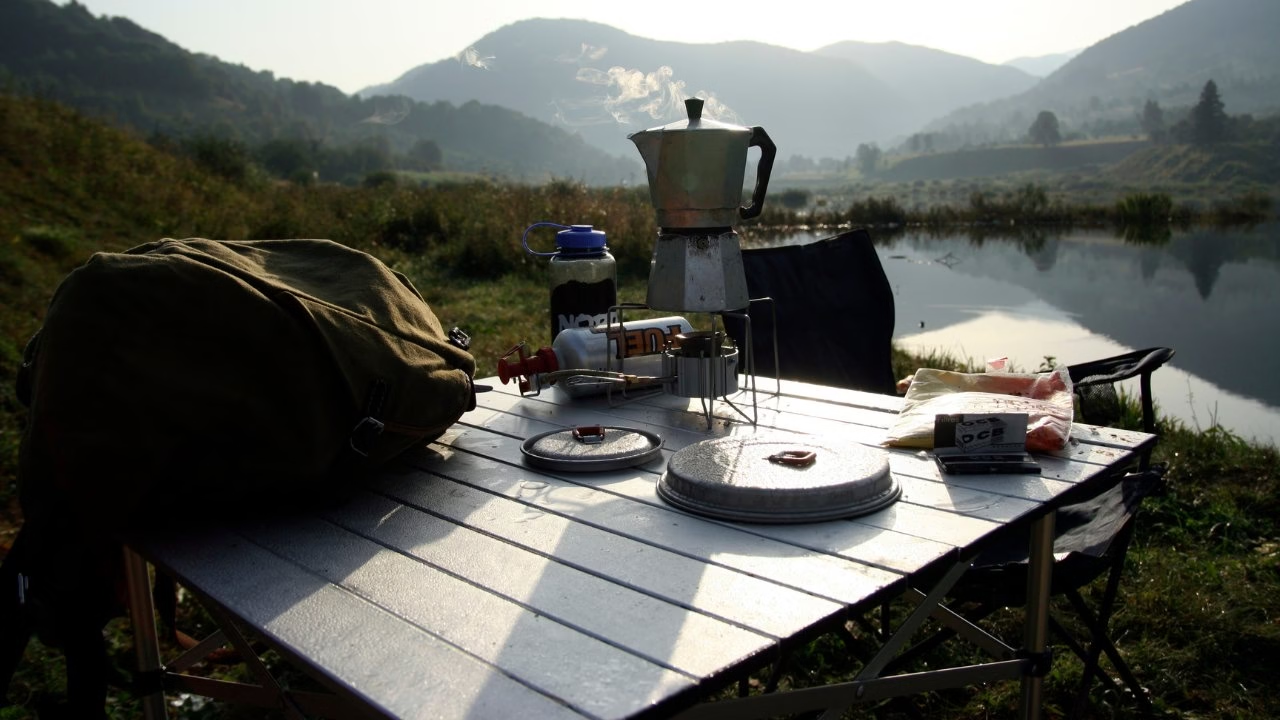
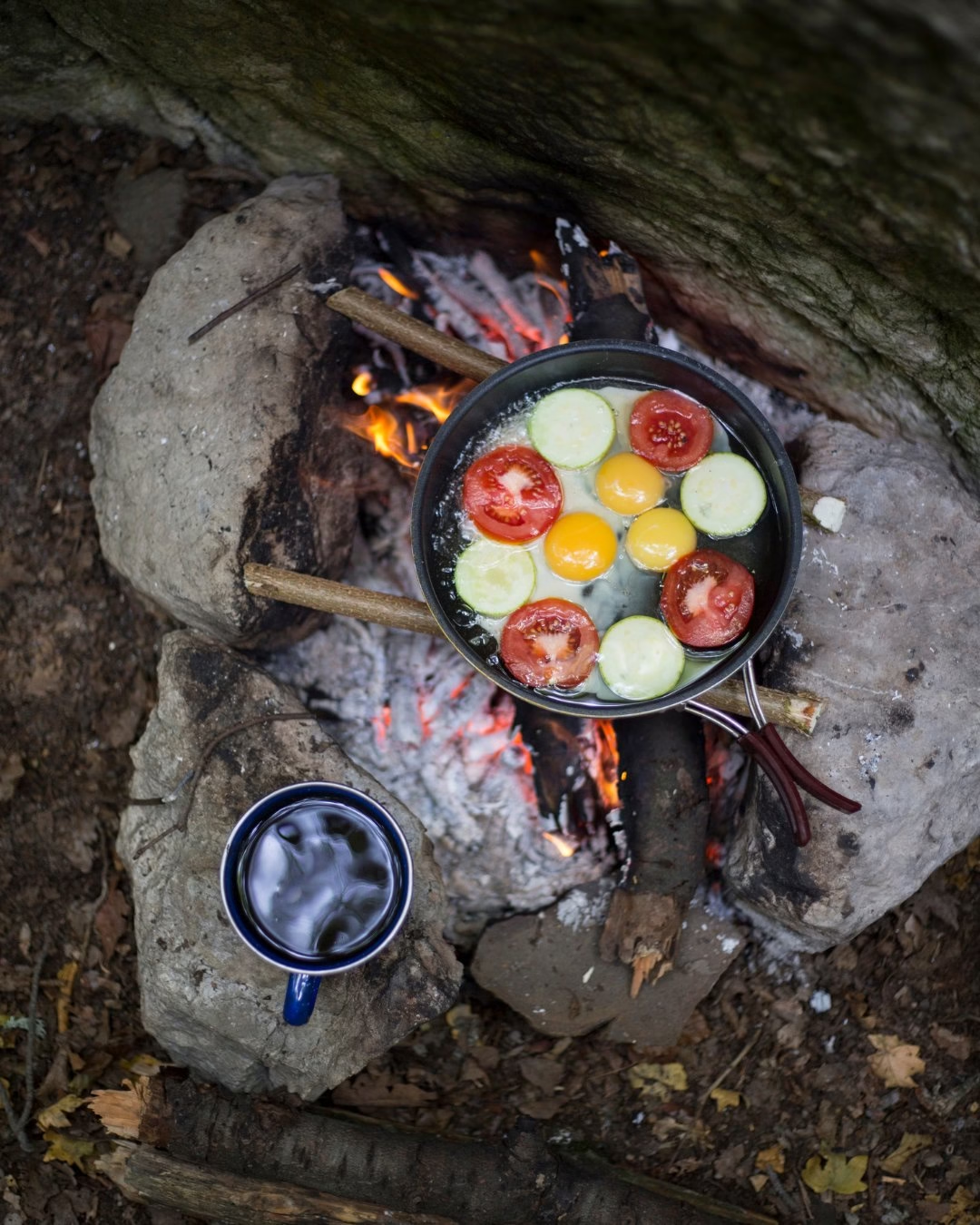
Fresh coffee in the morning, trees rustling nearby and a lake beyond the tent, with scrambled eggs in the pan and crusty bread with jam: campsite meals can be part of the pleasure of a holiday. Cooking outdoors need not mean living on tins and snack bars. A little preparation makes it possible to set up an open-air kitchen and enjoy each meal.
Essential equipment for a camping kitchen
Before setting off, think through what needs to go in the car. A gas camping stove is the starting point, preferably with two burners so you can cook pasta and make a sauce at the same time. Pack compatible gas cartridges, checking whether the stove takes a threaded cartridge or an Easy Click connection. Discovering a mismatch at the campsite is an avoidable frustration.
A portable fridge makes fresh food much easier to manage. Compressor models powered by an additional battery or the car’s accessory socket can keep vegetables, meat and dairy products chilled for several days. This gives you more choice than relying on tinned food throughout the trip.
Nesting camping pans save luggage space. Add a chopping board and a knife with a plastic sheath: an exposed blade is hazardous when rummaging through a bag for ingredients. Screw-top containers keep dry food from spilling around the tent. A sieve, peeler, plates, cutlery and mugs complete the basic kit, ideally in lightweight, durable camping versions. Cooking should be enjoyable without taking up too much of the day.
Organising a small cooking area
Divide the space into areas for preparing meals, storing food and collecting dirty dishes. Folding tables or worktops provide useful preparation space and pack down to about the size of an ironing board. Decant spices into small, airtight containers rather than taking full-sized packets. Small bottles of cooking oil or olive oil are usually enough for the trip.

Hooks and nets strung between trees keep utensils within reach. Bowls can serve more than one purpose: reserve a large one for dirty dishes and use the others for salads and prepared ingredients. Pack a spare lighter in case the stove’s ignition fails. A corkscrew can be useful too, particularly for one-pot dishes simmered with wine under the stars.
One-pot meals for the campsite
One-pot cooking keeps effort and washing-up to a minimum, saves space and water, and can still deliver plenty of flavour. Spaghetti with tomato sauce takes around 15 minutes: fry onion and garlic in olive oil, add home-preserved or tinned tomatoes and a pinch of basil, then stir in cooked pasta. Parmesan or mozzarella on top gives the dish something of an Italian trattoria.
Macaroni cheese is campsite comfort food. Fry cooked fusilli or macaroni in butter, gradually add milk and crumble in cheddar until the sauce is creamy and stretchy like fondue. It is a rich meal that can be particularly welcome after a day’s walking.
Chicken and mushroom risotto can make use of edible wild mushrooms gathered that morning, provided they have been reliably identified. Their flavour differs from shop-bought mushrooms. Fry them with chicken and onion, add uncooked rice and stock, and let it absorb the liquid and flavours. Finish with a little olive oil for a meal that would not be out of place in a restaurant.
For a vegetarian option, cook udon with tofu and soy sauce. Fry leek, onion and carrot with smoked tofu, then add the noodles, stock and soy sauce. Coriander or parsley and a few drops of lemon juice finish a dish reminiscent of Asian street food.
Cooking over a campfire
A campfire is a natural gathering point in the evening. Sausages on sticks, cooked over the embers, are a familiar favourite. Bread can be toasted on a stick or on hot stones beside the fire for a crisp outside and soft centre.

Potatoes wrapped in aluminium foil and placed in the embers take around an hour. Split them open and add butter and chives to serve alongside grilled meat. A cast-iron pot suspended over the fire offers more options, from goulash and soups to bigos, the Polish cabbage and meat stew.
Toasted marshmallows make a simple evening dessert. Sandwich one between two biscuits with a piece of chocolate for s’mores, the campfire treat familiar from American films.
Food to pack without a fridge
Tinned tuna, sweetcorn, beans and tomatoes form the basis of many meals. Instant soups need only hot water and can taste particularly good after a day outdoors. Dry staples such as pasta, rice, groats and porridge oats store at room temperature and provide plenty of energy. Rusks or crispbread keep better than ordinary bread, with wholegrain versions supplying energy for longer walks.

Nuts and dried fruit make useful alternatives to energy bars. A 100-gram portion of almonds or walnuts can provide around 600 calories, while dried fruit offers something sweet without melting like chocolate in a rucksack. Powdered milk is useful for morning coffee, and beef jerky or suitable freeze-dried meals provide complete protein without much weight.
Kabanosy, thin dried sausages, are another suggestion, preferably traditionally made, and go well with bread and a pickled cucumber. Choose a product labelled as suitable for storage without refrigeration and follow its storage instructions; dried sausages cannot be assumed safe at any temperature.
Simple campsite breakfasts
Scrambled eggs with bacon make a filling start to the day. Fry the bacon, add the eggs, stir and season, then serve with sliced fresh vegetables and bread. Porridge with fruit and nuts is a healthier option: cook the oats in milk or water, add chopped apple or banana, and finish with nuts and honey for energy to fuel a morning’s walking.
For French toast, dip bread in beaten egg and milk, then fry it in butter. Jam or honey makes it a breakfast worthy of a café. Coffee brewed in a moka pot, or by pouring hot water directly over grounds in a mug, completes the morning routine.
Snacks for longer walks
For a full day’s walk, choose snacks that provide energy and keep well in a rucksack. Homemade bars of oats, nuts and honey are suggested as a lighter, healthier alternative to shop-bought versions. Trail mix can be tailored to taste: almonds, raisins, cranberries, cashews and dark chocolate make a good combination.

Peanut butter and jam sandwiches can keep for several hours without a fridge. Hard cheeses such as cheddar or gouda are another option, but follow their storage instructions and keep them chilled where required. Carrot, cucumber and pepper sticks add fresh flavours and vitamins. These meals and snacks need only a few basic ingredients.
Storing food at the campsite
Keep dry food in sealed containers to protect it from moisture and insects. Burying food or putting it in a cold stream is not a reliable substitute for refrigeration. Food that needs chilling should be kept in a fridge or a cool box with ice packs, with the temperature checked to ensure it stays at 5°C or below.
Keep supplies out of direct sunlight. Shade beneath trees can help, but do not assume a tent stays cool enough for perishable food. A wet towel wrapped around drinks bottles and regularly dampened offers some evaporative cooling; it does not provide reliable refrigeration.
Use opened products promptly, as open tins and jars do not keep for long in the heat. Plan meals around using whole packs. Whole potatoes, onions and carrots, along with firm fruit such as apples and oranges, can keep for several days without chilling.
Further campsite cooking ideas
Choosing a cooking method
A gas camping stove or barbecue is usually the most convenient option. A two-burner stove offers the greatest flexibility, allowing you to cook much as you would at home, while a barbecue suits meat and vegetables. A campfire works well for relaxed evening meals when there is more time. Chopped ingredients, prepared sauces and ready-portioned spices make cooking easier whichever method you choose.
A shopping list without refrigeration
Pack tinned food, pasta, rice, groats, freeze-dried meals, nuts, dried fruit, crispbread, jam, honey and peanut butter. Whole root vegetables and firm fruit can also last several days without a fridge.
Cooking in a caravan
A caravan gives you more scope for elaborate meals. Use the oven for bakes and the larger fridge for fresh ingredients. Soups, braised meat and cakes are all possible, making it easier to enjoy the same range of dishes as at home.
Planning a kitchen means making room for preparation, storage and washing up. Find architects, interior designers and interior photographers in the PLNDesign directory.
See also:
- Dermocosmetics bring dermatological expertise to daily skincare
- DRUTT. reworks 1970s market bags with interchangeable steel handles