

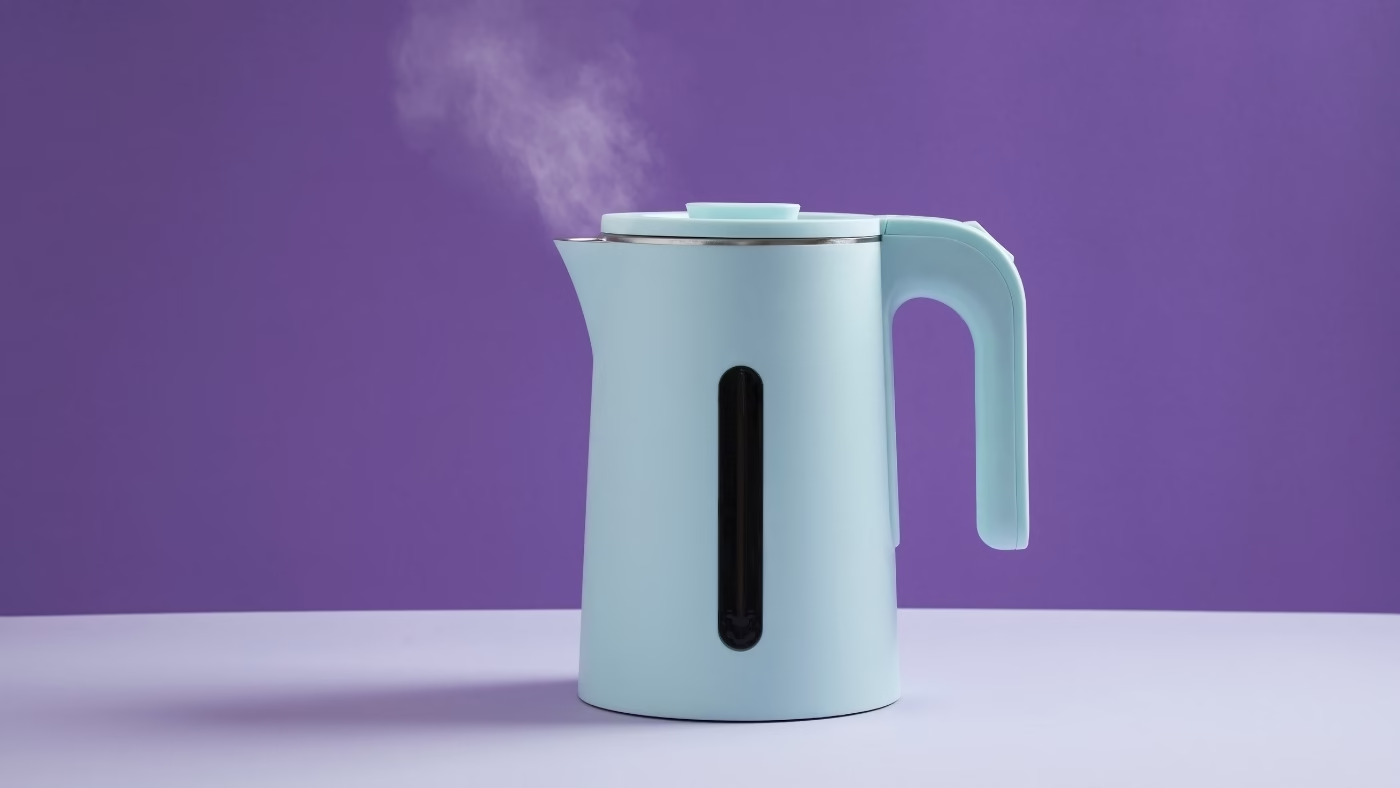
Limescale forms when hard water is boiled, leaving white deposits on a kettle’s heating element and inner walls. It consists of minerals in the water, mainly calcium and magnesium compounds. Over time, it can reduce the kettle’s efficiency and affect the taste of the water. Vinegar, citric acid or a ready-made descaler can be used to remove it.
Kettle limescale at a glance
- Calcium and magnesium compounds precipitate from hard water when heated, accumulating on the base, walls and heating element.
- The main problem is the effect on the kettle: deposits hinder heat transfer, lengthen boiling times and shorten the appliance’s life.
- Acids dissolve limescale. Options include distilled white vinegar and citric acid, with lactic acid also used in commercial descalers.
- Monthly descaling is usually enough for average use, but very hard water requires more frequent treatment.
Where limescale comes from
Limescale comes from the water, rather than the kettle itself. The white coating on the base and walls consists of calcium and magnesium compounds that become solid when heated and settle on surfaces. Higher temperatures accelerate this process, while harder water produces visible deposits more quickly.
Tap water in Poland contains substantial amounts of calcium and magnesium ions, particularly in large cities and areas with limestone geology. Hardness varies with the region and the condition of the water supply network, so the rate of build-up can differ considerably between addresses. Blaming the appliance and replacing it is a common mistake: a new kettle will not resolve hard tap water.
The effects on the kettle and drinking water
Limescale is primarily a problem for the appliance. Calcium and magnesium occur naturally in drinking water, and the World Health Organization has not set a health-based guideline value for water hardness. The greater concern is the kettle itself. Deposits hinder heat transfer, slowing boiling and making the heating element hotter and more energy-intensive. Thick scale increases the risk of overheating and damage to the element, shortening the kettle’s life.
The water in the cup can also be affected. It may taste bitter or metallic, and small mineral particles can pass into tea and coffee. Regular cleaning therefore matters both for the appliance and for the quality of the water you drink.

Removing limescale from a kettle
An acidic solution dissolves scale without scrubbing. The basic sequence is to boil the prepared solution, leave it to work, empty the kettle, rinse it and then boil clean water. Follow the appliance manufacturer’s cleaning instructions when choosing a treatment.
Distilled white vinegar
Pour vinegar into the kettle and add enough water for the solution to cover the deposits. Bring it to the boil and leave it for around an hour. Empty the kettle, rinse it several times and finish by boiling clean water. Vinegar’s smell can linger, so this final boil may need repeating.
Citric acid
Add two teaspoons of citric acid to the kettle, cover with water and bring to the boil. Leave the solution for around 15 minutes to several hours, then rinse the interior thoroughly. Lemon juice can be used in a similar way. Both approaches are often chosen by people who dislike the smell of vinegar.
Bicarbonate of soda
Half-fill the kettle with water, add one or two teaspoons of bicarbonate of soda, bring to the boil and leave for 30 minutes. Once cool, wipe the inside with a sponge and rinse. Bicarbonate of soda also neutralises unpleasant smells.
Ready-made descalers
Commercial products often use the same ingredients as household treatments, most commonly citric or lactic acid. Follow the product manufacturer’s instructions exactly.
Dealing with thick deposits
Thick scale calls for repeated treatment rather than harder scrubbing. Leave a vinegar solution in the kettle for an hour, bringing it to the boil several times during that period until flakes begin to separate from the walls. If deposits remain, prepare a fresh solution and repeat the process.
Do not use stiff brushes, wire scourers or sharp objects. They can damage the kettle’s inner surface and reduce its performance, with greater risk in models with a concealed element or double walls. Avoid delaying descaling: each additional layer on the base and element makes cleaning take longer.

How often to descale
For average use, once a month is generally enough. The right interval depends on water hardness and how often the kettle is boiled. With several boils a day, visible deposits can appear within a week; in very hard-water areas, weekly descaling may be needed. A hardness tester indicates the level of calcium and magnesium, although the speed at which scale builds up is already a useful clue.
Slowing limescale build-up
Start with everyday habits. Boil fresh, cold water rather than topping up water left from a previous boil, which increases the concentration of minerals. Boil only what you need, empty the kettle after use and leave it open to dry.
Filtering drinking water is another option. A filter jug or tap-mounted filter can reduce calcium and magnesium ions, although it will not eliminate scale entirely. A kettle’s limescale filter at the spout catches some particles before they reach the cup.
Water-treatment equipment offers further options. An under-sink filter with a softening cartridge serves the kitchen, reverse osmosis removes the minerals responsible for deposits, and a softener fitted to the mains supply treats the whole home. Softening cartridges need regular replacement to remain effective.
Water softening and scale conditioning work differently. Softening removes the minerals responsible for hardness; conditioning leaves them in the water while limiting hard deposits. The pipe materials in the installation also affect the choice, so discuss the scope of work with a plumber.

Further advice on kettle limescale
Alternatives to vinegar
Citric acid is an alternative, while lactic acid is also used in ready-made descalers. For thick deposits, effectiveness also depends on contact time and repeating the treatment.
Limescale and chimney soot
Limescale is sometimes called boiler scale, but it is not chimney soot. It forms when minerals dissolved in tap water precipitate during heating; the appliance itself is not the source.
Kettles with limescale filters
A filter at the spout catches some particles but does not eliminate them. The kettle’s interior still needs periodic descaling.
Drinking softened water
Ion-exchange softeners regenerated with salt increase the sodium content of the water. When installing a softener, retain an unsoftened mains-water supply to the kitchen tap used for drinking and cooking.
Allow for an under-sink filter or a mains water softener when designing the kitchen and plumbing, rather than after the renovation. For a refurbishment that addresses hard water at its source, find architects, interior designers and interior photographers in the PLNDesign directory.
See also:
- Dermocosmetics bring dermatological expertise to daily skincare
- DRUTT. reworks 1970s market bags with interchangeable steel handles