


A prospective client may search Google for an interior designer, advice on a renovation or help with a particular room. A studio’s website needs to explain its services clearly enough for both people and search engines to understand them. SEO helps connect those pages with relevant searches, giving potential clients another way to discover the practice and assess its work.
SEO for interior architects at a glance
- Visibility on Google. SEO helps studios reach people searching for services such as ‘interior architect near me’, ‘office interior design Warsaw’ and ‘residential interior design services’.
- Content and keywords. A website needs well-written, useful and comprehensive content that reflects real client searches. Divide the offer into pages or clear sections, including residential interiors, commercial interiors and project supervision.
- Images and portfolios. Galleries need clear project descriptions, descriptive filenames and appropriate alt text. Check how pages perform on mobile devices and reduce unnecessary downloads while preserving image quality.
Making the studio visible to prospective clients
SEO aims to improve a website’s visibility for relevant searches and attract visitors who may be interested in its services. When someone types ‘interior architect near me’ or ‘office interior design Warsaw’ into Google, its ranking systems determine which results to show. Clear content and an accessible website help search engines understand the practice, although no set of changes guarantees a particular position.

People searching for interiors may be gathering ideas or looking for someone to commission. A studio’s website should serve both needs, showing completed projects while explaining the services behind them. The aim is to help visitors decide whether the practice is right for their project, rather than simply increase traffic.
Start with content and loading speed
A website’s content, including text and images, helps explain what it offers. Write clear descriptions of services, projects and working methods that answer prospective clients’ questions. Adding a list of terms to the HTML meta keywords tag will not improve Google rankings: Google Search does not use that tag.

Interior architects’ websites, like those of wedding photographers, depend heavily on visual material. Images need to remain clear on large screens without forcing someone on a phone to download unnecessarily large files. Responsive images allow the browser to select a suitable version for the device, while compression can reduce file size without sacrificing the detail needed to judge a project.
Assess loading performance and usability rather than treating a fixed number of megabytes as a universal target. Use PageSpeed Insights to identify problems, then review image sizes, loading behaviour and the other resources each page requires. Core Web Vitals cover loading performance, responsiveness and visual stability, but a good score alone does not guarantee a high search ranking.
Choose keywords that describe the services
Effective keyword research aligns the content with the way prospective clients search for interior architecture services. Start with the services you provide and the places you work, using terms such as ‘interior architect’ or ‘interior designer’ where appropriate. Keyword tools can help estimate demand and competition, but relevance to the practice matters more than choosing the phrase with the largest search volume.

Possible phrases include ‘interior architect near me’, ‘residential interior design services’, ‘commercial interior design Kraków’ and ‘modern office interiors’. Searches can also be more specific, such as ‘modern living room design Wrocław’, ‘small bathroom design Kraków’ or ‘interior architect consultation Warsaw’. These are examples to investigate, rather than a verified list of high-volume terms.
Divide the services you actually provide into dedicated pages or clearly defined sections, such as ‘Residential interior design’, ‘Commercial interior design’, ‘Colour consultations and material selection’ and ‘Project supervision’. Use relevant phrases naturally within each, supported by information about the scope of work. If the practice specialises in contemporary lofts, for example, describe the materials and design decisions in those projects. The website’s appearance should also reflect your style and aesthetic judgement, while its content gives you space to explain your approach in detail.
Optimise images and give the portfolio context
Photographs and visualisations show the work, while project descriptions explain the brief, location, materials and decisions behind it. Let the content determine the balance of images and text, rather than working towards an arbitrary percentage. A useful project page gives readers enough context to understand what the studio did.

Give project images short, descriptive filenames: modern-living-room-warsaw.jpg is more informative than img123.jpg. Write alt text as a natural description of the relevant visual content, such as ‘Living room with oak shelving and a green sofa’, when that is what the image shows. Avoid turning it into a list of keywords or a hyphenated filename. Google’s image guidance explains how filenames, surrounding text and alt attributes help it understand images; alt text also supports accessibility.
The portfolio is the centre of an interior architect’s or designer’s website. Link relevant project pages to articles that explain the design process, using link text that makes the destination clear. These internal links help visitors explore the work and help search engines discover related pages. WordPress offers tools for managing project pages; whichever system you use, the content and the way the site is built still need care.
A blog can introduce clients to your expertise
A blog gives a studio space to answer questions that do not fit naturally on a services page. Useful articles can introduce readers to the practice and demonstrate its experience. Concentrate on what the content helps someone understand or decide, rather than assuming that keeping them on the page for longer will improve its ranking.

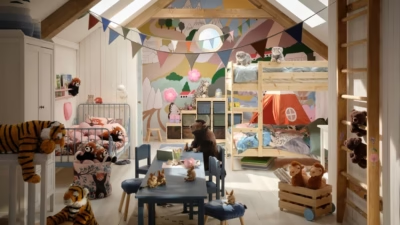
Topics might include colour trends, reviews of new tile collections, kitchen ergonomics or ways to refresh a child’s room. Each can attract readers looking for ideas and include phrases that reflect real questions, such as ‘how to combine industrial and rustic styles’, ‘best paint for a bathroom’ or ‘practical bedroom wardrobe’.
Other possibilities include ‘Key interior design and architecture trends for 2026’, ‘How to choose the right interior architect for your project’ and ‘How much an interior designer costs’. Photographs or short videos can clarify the advice and show examples from the studio’s work. Choose a publishing schedule that leaves time to prepare useful material and update existing articles when the information changes.
Local SEO connects studios with nearby clients
Local SEO helps a practice reach people searching for services in a particular area. Competition varies by location, service and search query, so a city’s size alone does not establish how difficult it will be to rank. Assess the relevant results for the places where the studio actually works.

State the cities or regions you serve in relevant page titles and content, and write meta descriptions that accurately summarise each page. ‘Interior design Gdańsk’ and ‘small studio flat design Wrocław’ illustrate how a service and location can be combined. Google may use the meta description in its search snippet, but it can also select text from the page.
Keep your Google Business Profile accurate, with appropriate business details, services and project photographs. Ask clients for honest reviews and respond helpfully. Google’s local results depend on relevance, distance and prominence. Review volume and positive ratings can help as part of that wider assessment.
Build links from relevant sources
Relevant editorial links from design and architecture publications can help readers discover a studio and give search engines context about its work. The value is not simply in accumulating links: the reason for the link and the page it appears on matter. Google’s spam policies address links created primarily to manipulate rankings, including paid links that pass ranking credit.
Work with publications, bloggers and other people whose audiences have a reason to be interested in the practice. Expert contributions and project features can build recognition and bring visitors to the website. Social media can help distribute that material, but sharing a link does not guarantee more crawling or higher positions in Google.
Coverage in industry publications, home design blogs or local media articles about renovations can be particularly useful when it explains the work to a relevant audience. For commercial placements, Google recommends marking paid links with rel="sponsored"; nofollow is also accepted. Assess paid exposure through the audience it reaches and the relevant visitors it can bring to the studio’s website.
A profile in the PLNDesign directory
Alongside work on its own website, a studio can present its services where prospective clients search for specialists. One option is the PLNDesign.pl directory of architects, interior designers and interior photographers. Visitors can filter by location and services, explore a studio’s work and use its contact details to make an enquiry. The studio can update its portfolio as new projects are completed.
A directory profile provides an ongoing point of reference, bringing the studio’s articles on the portal together in one place. Current details, a telephone number and links to its website and social profiles make it easier to continue the conversation. Its value lies in helping relevant readers find and assess the practice.
Listed studios receive priority for publication, while an English-language article makes information about the practice accessible to readers abroad. These forms of promotion complement the studio’s own website and give prospective clients more ways to explore its work.
A directory profile gives clients another route to a studio’s portfolio and contact details. Find architects, interior designers and interior photographers in the PLNDesign directory.
See also:
- IKEA adds hot-dog ornaments and geometric patterns to Christmas 2026
- ERKADO introduces ICONIC door collection at Warsaw Home 2026