

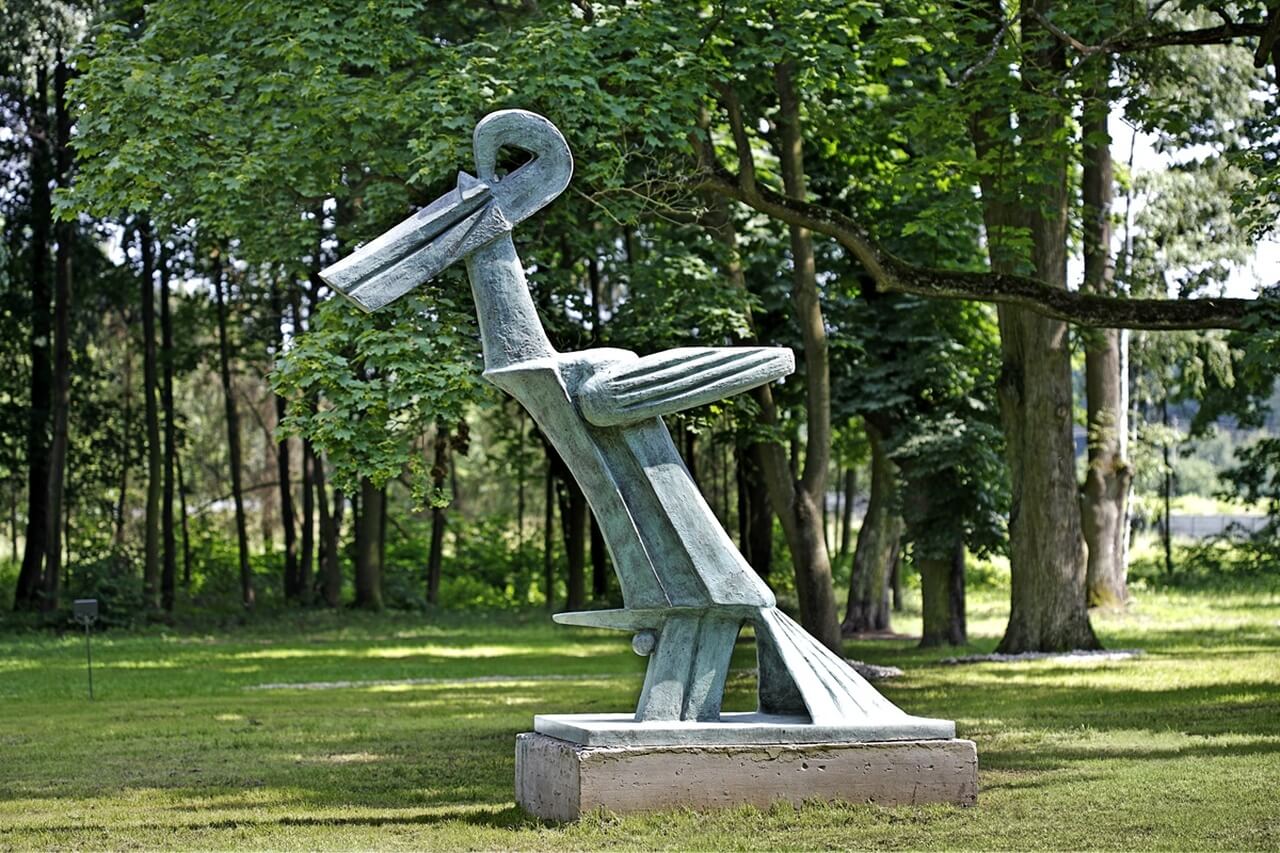
A visit to a neglected park in Owczarnia, Poland, gave art dealer and collector Marek Keller the idea for a gallery of Mexican art. The sculpture garden he established on the Kazimierówka estate for the work of Mexican artist Juan Soriano brought this village near Warsaw to international attention. For Keller, a philanthropist who spent much of his life introducing Mexican culture to Poland, the garden was one of his most important undertakings.
A park that Keller first heard about from Krystyna Janda
The actress Krystyna Janda told Keller about the park while she was planning her theatre, Teatr Polonia. She had asked Małgosia Markiewicz’s studio to work with her on the theatre. The studio was also designing Keller’s own apartment. For all the neglect at Owczarnia, one visit was enough for Keller and Soriano to fall for the place. They saw a way to revive it and give the Mexican art Keller loved a home in Poland.

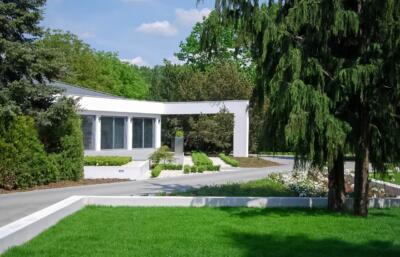
The English-style park extends over seven hectares, with ponds and mature trees, some protected as natural monuments. A manor house that once stood there was destroyed during the First World War. Two barns were converted into galleries, and the former estate manager’s house was fitted out for Keller. The outbuildings include a gardener’s cottage.
The project included renovating the pre-war buildings, fencing the site and clearing the ponds and grounds. In the sculpture garden, the paths follow their old routes through the park.
A summer home for Keller and a garden for the bronzes
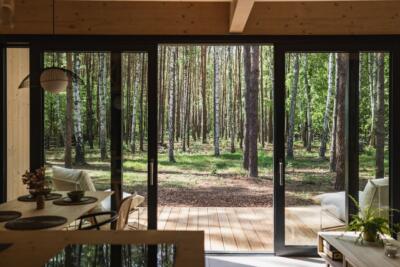
Craftspeople made every piece of furniture in the former estate manager’s house. Some have a history in the material itself, among them a table made from old railway sleepers. In the kitchen, Keller kept a collection of menus from dinners that he and Soriano had attended aboard the yachts of well-known hosts.

Alongside the art, the house has some remarkable finishes. Lining the bathroom with backlit onyx was the most demanding part of the interior work. Getting the bronze sculptures into the garden presented a different difficulty. The selected works travelled by sea from Mexico to Hamburg and then by lorry to Poland. The hardest stretch came at the end, where there was no paved road into the park.
A gallery opening in 2009
After his Warsaw apartment, Owczarnia was the second project Keller entrusted to Małgosia Markiewicz’s studio, later led by her daughter, Kinga Baumann. Baumann recalls travelling to Spain to photograph the architecture as part of the work. The intention was to make a place that drew as fully as possible on Polish and Spanish-speaking cultures, an idea rooted in Keller’s love of Mexican art.

Keller worked on Kazimierówka for many years. The first phase of renovation ended in 2009, when an exhibition of Soriano’s work opened the gallery of contemporary Mexican art to the public. Soriano did not live to see the sculpture garden open.
Keller died on 29 October 2023. He had spent more than 40 years bringing Mexican culture to audiences in Poland. In its ambition, its cost and the effort it took to move those bronzes across an ocean and into a village park, Kazimierówka was the work of a lifetime. The galleries and garden carried that work on after his death.
Two barns in Owczarnia became galleries of Mexican art, and the estate manager’s house was adapted for Marek Keller. Find an architect to give an old building a new use in the PLNDesign directory.
See also:
- LEGO Art recreates Hokusai’s Great Wave in 1,810 pieces
- Palace of Versailles: history, architecture, gardens and how to visit