

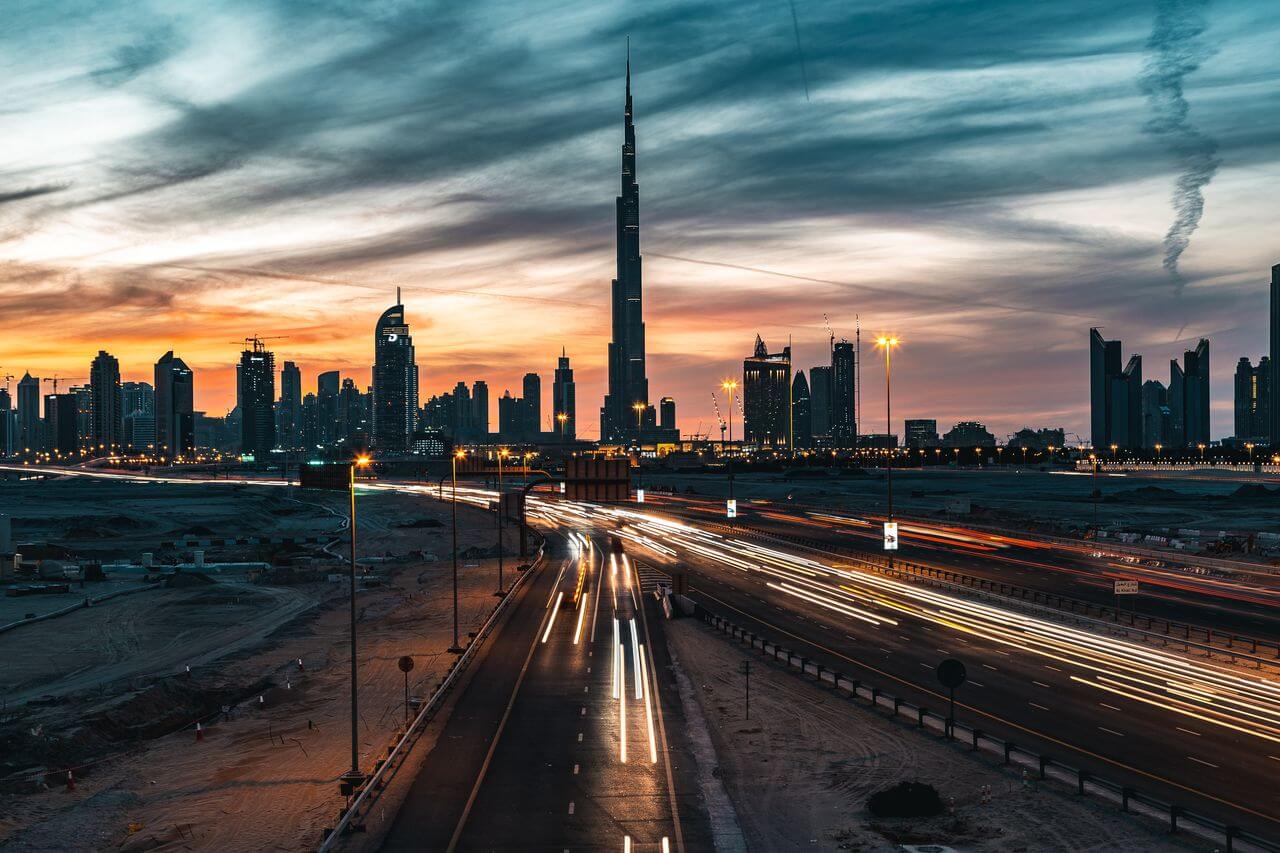
Burj Khalifa is an 828-metre skyscraper in Downtown Dubai and the tallest building in the world, a title it has held since it opened on 4 January 2010. Adrian Smith designed it at Skidmore, Owings & Merrill (SOM) for the developer Emaar Properties, and the tower combines a hotel, homes and offices with observation decks open to the public on levels 124–125, 148 and 152–154.
Burj Khalifa at a glance:
- 828 metres and 163 floors: no other building has as many floors, and the steel spire accounts for more than 200 metres of the height.
- Designed by Adrian Smith with engineer Bill Baker at SOM: the Y-shaped plan abstracts a desert flower, and a buttressed concrete core keeps the tower stiff against the wind.
- Known as Burj Dubai during construction: the tower took its present name at the opening ceremony, in honour of UAE President Sheikh Khalifa bin Zayed Al Nahyan.
- Tickets start at AED 189 for levels 124 and 125 (November 2026), and the entrance is on the lower ground floor of Dubai Mall.
How tall is Burj Khalifa?
Burj Khalifa measures 828 metres to the top of its spire, which makes it both the tallest building and the tallest freestanding structure in the world. Its 163 floors earned it the Guinness World Records title for the most floors in a building, and two more levels below ground hold car parking. The previous record holder for height, Taipei 101, reaches 509.2 metres.
The spire is part of the structure, not a mast added on top. It contains more than 4,000 tonnes of structural steel, was assembled inside the building and then jacked to its full height of over 200 metres with a hydraulic pump. It houses communications equipment, and its white xenon obstruction lights flash 40 times a minute to warn aircraft. Because almost none of the spire can be occupied, the Council on Tall Buildings and Urban Habitat (CTBUH) counts its 244 metres as ‘vanity height’. Without it the tower would stand 585 metres tall, the level of The Lounge on floors 152 to 154.

Who designed Burj Khalifa?
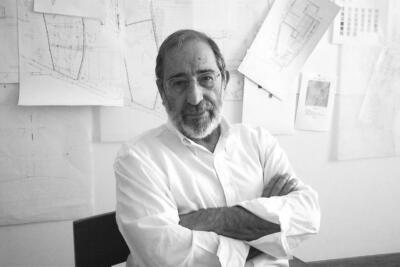
Burj Khalifa was designed by the Chicago office of Skidmore, Owings & Merrill, with Adrian Smith as design partner and Bill Baker as chief structural engineer. Emaar Properties chose the practice after inviting leading architecture firms to a design competition. SOM had already designed the Sears Tower in Chicago, now Willis Tower, an earlier holder of the tallest building title. Smith left SOM in 2006, before the tower was finished, and founded Adrian Smith + Gordon Gill Architecture.
The starting point was Hymenocallis, a regional desert flower abstracted into the tower’s triple-lobed footprint. SOM also names the patterning systems of Islamic architecture as a source, and seen from the air the tower recalls the onion domes of that tradition. Smith has described looking out of his office window at the curved three-wing plan of Lake Point Tower in Chicago and seeing a prototype, while SOM architect Marshall Strabala has said the design grew out of Tower Palace Three, a 73-storey residential tower in Seoul. In its early planning Burj Khalifa was to be entirely residential. The Y-shaped plan makes the most of residential and hotel floor space and opens up views towards the Gulf, and the 11-hectare park around the base, by landscape architects SWA Group, takes the same flower as its theme.

How does Burj Khalifa withstand the wind?
The tower resists the wind through its shape as much as through its structure. Burj Khalifa uses a buttressed core: three wings, each with its own high-performance concrete corridor walls and perimeter columns, brace one another through a six-sided central core. The core takes the twisting forces and the wings resist wind shear, which makes the tower very stiff in torsion. The primary structure is reinforced concrete, and the uppermost part above it is lighter steel.
As the tower rises, its wings step back in 27 setbacks arranged in an upward spiral, so the width of the building changes at every tier. SOM describes the aim as a way to ‘confuse the wind’: vortices cannot build up because the wind meets a different shape at each level. The setbacks follow the structural grid, with columns above standing on walls below, which gave a direct load path and avoided the delays usually caused by transferring columns. Engineers ran more than 40 wind tunnel tests, from studies of Dubai’s wind climate to large structural models, and even the construction cranes were tested. At its tallest point the tower sways a total of 1.5 metres.

The foundations had to work in weak ground, as test holes drilled to a depth of 140 metres found weak sandstone and siltstone. The tower stands on a reinforced concrete mat 3.7 metres thick, poured in four stages with a total of 12,500 cubic metres of concrete. The mat rests on 192 bored piles, each 1.5 metres in diameter and 43 metres long, and a cathodic protection system beneath the concrete counters the sulphate- and chloride-rich groundwater.
What are Burj Khalifa’s facade and interiors made of?
The tower is clad in close to 26,000 glass panels, each cut by hand, set in aluminium frames alongside textured stainless steel spandrel panels and vertical tubular fins. Each double-layer glass panel weighs 362 kilograms and carries a silver coating that limits solar heat gain in the Dubai summer. More than 300 cladding specialists from China worked on the installation, which set a world record for the highest aluminium and glass facade, at 512 metres. The aluminium used across the building weighs as much as five Airbus A380 aircraft.

SOM’s interiors team began planning at the earliest stage of the design and worked on the public areas, from lobbies and lounges to the board room and chairman’s suite, together with the designer Nada Andric. The palette combines glass, stainless steel and polished dark stone with silver travertine floors, Venetian stucco walls, handmade rugs and Brazilian Santos rosewood, chosen, according to SOM, to suggest shelter, comfort and understated luxury. The interiors of the highest floors take celestial themes and the idea of a stationary spacecraft as their reference, while the lower floors draw on the natural elements of the land.
More than 1,000 works by Middle Eastern and international artists are installed in the tower and along the surrounding Mohammed Bin Rashid Boulevard. The residential lobby holds World Voices by Jaume Plensa: 196 hand-made cymbals on slender stainless steel rods above shallow pools, onto which water drips slowly from the ceiling to produce an ambient soundscape.
How was Burj Khalifa built?
Dubai officials presented projects on this scale as a way to win international recognition and investment for an economy moving away from oil. Excavation started in January 2004, the tower topped out on 17 January 2009, the facade was completed in September 2009 and the building opened on 4 January 2010. The main contractor was Samsung C&T of South Korea, in a joint venture with Belgium’s BESIX and the UAE company Arabtec, with Turner as project manager and Hyder Consulting as supervising engineer. Mohamed Alabbar, chairman of Emaar, put the total cost at about US$1.5 billion.
Construction used 330,000 cubic metres of concrete and 39,000 tonnes of steel reinforcement. In November 2007, 80-megapascal concrete for the highest core walls was pumped from ground level to a record 601 metres. During the summer months the concrete was poured at night with ice added to the mix, so that it cured evenly and did not set too fast and crack.
The tower was built mainly by migrant workers from South Asia and East Asia, and in June 2008 about 7,500 skilled workers were on site. Complaints centred on low wages and on employers confiscating passports, and a BBC investigation and a Human Rights Watch report described poor housing, long hours and low pay. In March 2006 around 2,500 workers, angry about buses that were late to collect them at the end of their shifts, rioted on site and damaged cars, offices, computers and construction equipment.
The 2008 financial crisis left Dubai seeking multibillion-dollar support from Abu Dhabi and the UAE federal government. At the opening ceremony the Ruler of Dubai, Sheikh Mohammed bin Rashid Al Maktoum, renamed Burj Dubai as Burj Khalifa in honour of the UAE President and Ruler of Abu Dhabi, Sheikh Khalifa bin Zayed Al Nahyan, for his support. The property slump reached the tower too: ten months after the opening, rents had fallen by 40% and 825 of its 900 apartments stood empty. By October 2012 around 80% were occupied.
What is inside Burj Khalifa?
Burj Khalifa stacks its functions in bands. The Armani Hotel Dubai, the first hotel designed and developed by Giorgio Armani, occupies the concourse level to level 8 and levels 38 and 39, and the 144 suites of Armani Residences fill levels 9 to 16. Private residences, from studios to four-bedroom apartments, take up levels 45 to 108, and corporate suites spread across levels 112 to 154. The At.mosphere restaurant sits on level 122, 442 metres above the ground. Sky lobbies on levels 43, 76 and 123 have fitness facilities for residents, and those on 43 and 76 also have swimming pools.

The tower has 57 lifts and eight escalators. Its double-deck lifts travel at up to 10 metres per second, the longest lift run covers 504 metres, and the service lift, the tallest in the world, carries up to 5,500 kilograms. Pressurised, air-conditioned refuge areas are placed every 25 floors, and the stairways are enclosed in fireproof concrete.
Burj Khalifa holds LEED Platinum certification from the US Green Building Council under the v4.1 Operations and Maintenance rating for existing buildings. The ventilation system draws cooler, less humid air in at the top of the tower, and one of the largest condensate recovery systems in the world collects enough water each year to fill around 20 Olympic swimming pools, which irrigates the park. The water system supplies an average of 946,000 litres a day.
How can you visit Burj Khalifa’s observation decks?
Visitors reach the observation decks with one of three tickets sold through the official At the Top, Burj Khalifa website. The entrance is on the lower ground floor of Dubai Mall, through the gate near the Burj Khalifa lifts. Burj Khalifa/Dubai Mall station on the Dubai Metro Red Line serves the tower, and drivers can use the Fashion Avenue car park in Dubai Mall.
| Ticket | Levels | Height above ground | Price | Opening hours |
|---|---|---|---|---|
| Silver | 124 and 125 | about 450 m | AED 189 | 10:00–21:00, last entry 20:15 |
| Gold | 148, 124 and 125 | 555 m | AED 399 | 10:00–21:00, last entry 19:00 |
| Platinum | 152–154, 148, 124 and 125 | 585 m | AED 769 | 10:00–21:00, last entry 19:00 |
Prices and hours are as of 4 November 2026. The Silver ticket covers level 124, with an outdoor terrace, and level 125, decorated with Arabic mashrabiya screens, while a virtual reality climb costs extra. Gold adds level 148 with priority access, a guided tour in several languages, Arabic coffee and sweets in the SKY lounge and an outdoor terrace 555 metres up. Platinum also opens The Lounge on levels 152 to 154, which holds the Guinness World Records title for the highest lounge, with canapés, soft drinks and a welcome glass of sparkling wine. Children under three enter free, and anyone under 16 must be accompanied by an adult. Large bags, strollers and electronics are left at a counter before the visit, outside food and drink are not allowed, and the whole route is wheelchair accessible. A combined ticket for AED 278 adds the Sky Views Observatory at the Address Sky View hotel, with a glass floor and a glass slide.

Dubai Fountain and New Year’s Eve at Burj Khalifa
The Dubai Fountain, on the lake at the foot of the tower, performs every 30 minutes from 18:00 to 23:00 daily. It was designed by WET, the company behind the Bellagio fountains in Las Vegas, shoots water up to 150 metres into the air and is lit by more than 6,600 lights. Visitors can also take an abra boat ride on the lake or walk out on a floating boardwalk.
Every 31 December Emaar stages New Year’s Eve at Burj Khalifa, with fireworks launched from the tower, a light and laser show on the facade and a fountain show set to the same soundtrack. The event began with the tower’s inauguration in 2010, and the facade display earned the Guinness World Records title for the largest LED-illuminated facade in 2015 and 2019.
Is Burj Khalifa still the tallest building in the world?
Yes. In November 2026 Burj Khalifa remains the world’s tallest completed building. Its closest challenger is Jeddah Tower in Saudi Arabia, designed to rise more than 1,000 metres by Adrian Smith + Gordon Gill Architecture, the practice Smith founded after leaving SOM. Construction began in 2013, stopped in January 2018 and resumed in January 2025, and by early October 2026 the tower had reached 116 floors and 466 metres, with completion targeted for late 2028.
Lesser-known facts about Burj Khalifa
- Steel from East Berlin: part of the structural steel came from the demolished Palace of the Republic in Berlin, the former seat of the East German parliament.
- A longer day at the top: the sun stays visible for several minutes after it has set at street level, so residents above the 80th floor break the Ramadan fast two minutes later and those above the 150th floor three minutes later.
- Months of window cleaning: machines on three horizontal tracks, cradles above level 109 and a rope-access crew at the top clean the 24,348 windows. With all the equipment working, a team of 36 needs three to four months to clean the whole exterior.
- Tom Cruise on the facade: for the 2011 film Ghost Protocol, the fourth Mission: Impossible instalment, Cruise climbed the real facade, and the safety cables were removed digitally afterwards.
- Climbs and jumps: Alain Robert reached the top of the spire in six hours in March 2011, using a rope and harness to comply with UAE safety law. In April 2014 Vince Reffet and Fred Fugen jumped from a platform at the very top, 828 metres up, setting the record for the highest BASE jump from a building.
- A herd of elephants in concrete: the concrete in the tower weighs as much as 100,000 elephants, and 2,909 steps lead from the ground floor to level 160.
Burj Khalifa – frequently asked questions
Who owns Burj Khalifa?
Emaar Properties, the Dubai developer that commissioned the tower, owns Burj Khalifa. Many of the apartments and office suites inside have been bought by private investors.
Can you go inside Burj Khalifa for free?
The observation decks require a ticket, although children under three enter free. The Dubai Fountain shows on the lake in front of the tower are free to watch.
Can you stay overnight in Burj Khalifa?
Not at the moment. The tower’s only hotel, Armani Hotel Dubai, with 160 rooms and suites, opened on 27 April 2010 and has been closed for a full refurbishment since 1 April 2026, together with its restaurants and the Armani Residences.
Do you need to book Burj Khalifa tickets in advance?
Booking is not required, but it is recommended, since each ticket is valid for a chosen date and time and peak hours bring large crowds.
How long does a visit to the observation decks take?
The average visit lasts about an hour and a half. On level 148 guests can stay for up to 30 minutes and then spend as long as they like on levels 124 and 125.
When should you go to see the sunset from Burj Khalifa?
There is no separate sunset ticket. To watch the sunset comfortably, book entry to level 124 about two hours before sunset.
Is there a dress code at Burj Khalifa?
The observation decks, including The Lounge, ask for smart casual clothing.
At Burj Khalifa, interior planning started at the earliest stage of the design, alongside the structure. Bringing an interior designer in early helps on a much smaller scale too, whether you are building a house or reworking a flat. Find architects, interior designers and interior photographers in the PLNDesign directory.
See also:
- Charles Bridge in Prague: history, statues, towers and visiting tips
- Former fire station gains a new tower and community rooms in Brno