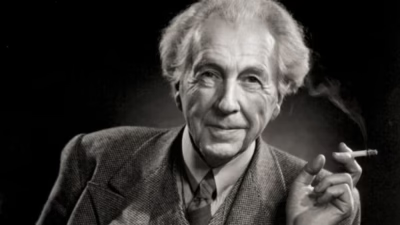


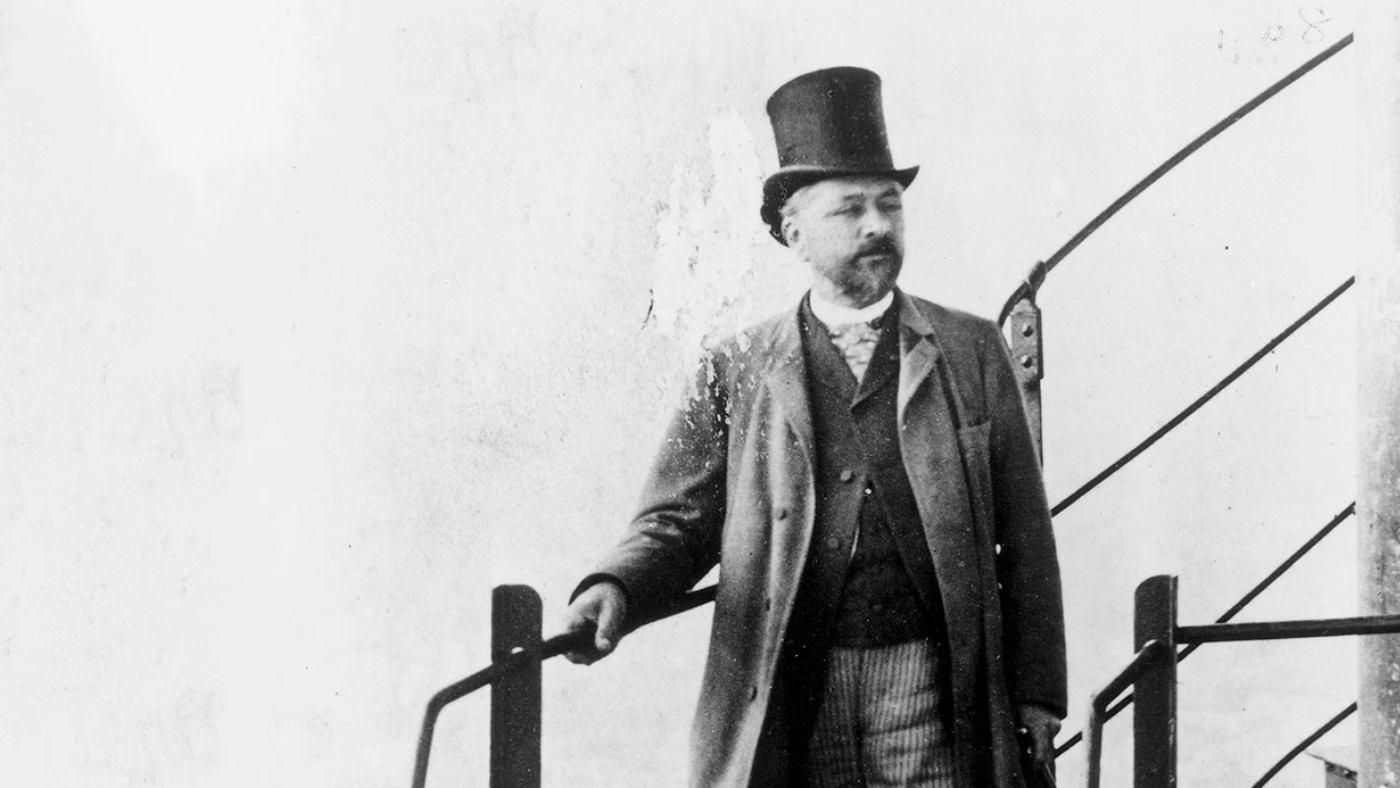
Gustave Eiffel (1832–1923) was a French engineer and builder whose company put up the Eiffel Tower in Paris and the iron framework that holds up the Statue of Liberty in New York. Before the tower he made his name with railway bridges and stations in France, Portugal and Hungary. After the Panama Canal affair he left his company and spent the last 30 years of his life on meteorology, radio and aerodynamics.
Gustave Eiffel at a glance:
- Born in Dijon in 1832, he studied chemistry at the École Centrale in Paris and was put in charge of a railway bridge over the Garonne in Bordeaux in his mid-twenties.
- His company’s best-known works are the Eiffel Tower (1889), the frame of the Statue of Liberty (1886), the Maria Pia Bridge in Porto, the Garabit Viaduct and Nyugati station in Budapest.
- The idea for the tower came from his engineers Maurice Koechlin and Émile Nouguier, while Eiffel bought their patent, paid most of the cost and saved the tower from demolition.
- After the Panama Canal affair he left his company in 1893, turned to meteorology and aerodynamics, and died in Paris in 1923, aged 91.
Who was Gustave Eiffel?
Gustave Eiffel was a French civil engineer and contractor who specialised in iron structures at a time when railways were spreading across Europe. He was born in Dijon on 15 December 1832 and registered as Bonickhausen dit Eiffel. His ancestor Jean-René Bönickhausen had come to France from the German town of Marmagen in the early 18th century, and the family took the name Eiffel from the Eifel hills of the region it had left. Gustave had the shorter surname made official only decades later.

His father, François Alexandre, had served as a hussar in Napoleon’s armies. His mother, Catherine Mélanie Moneuse, the daughter of a timber merchant, built up a coal-trading business that grew fast enough for her husband to give up his own work and help her. She sold it in 1843. With both parents busy, Gustave was brought up largely by his grandmother.
After school in Dijon and preparatory classes at the Collège Sainte-Barbe in Paris, he failed the oral exam for the École Polytechnique and studied at the École Centrale des Arts et Manufactures from 1852 to 1855. He chose chemistry, intending to take over the chemical works of his uncle Jean-Baptiste Mollerat, but a lasting quarrel between the uncle, a republican, and Gustave’s father, a Bonapartist, put an end to that plan.
How did Eiffel start building bridges?
Eiffel came to metal construction through railway work. In 1856 he became secretary to Charles Nepveu, an engineer who built for railway companies, and kept working for him without pay when the business ran into financial trouble. After Nepveu’s firm was taken over, the young Eiffel was put in charge of its most important job: a railway bridge of more than 500 metres across the Garonne in Bordeaux, built between 1858 and 1860. Its piers were built with the help of compressed-air caissons and hydraulic rams, both new techniques at the time, and on the site Eiffel saved a worker from drowning in the river.

He set up on his own in 1864 as a consulting engineer and, at the end of 1866, opened workshops at 48 rue Fouquet in Levallois-Perret, just west of Paris. In 1868 he went into partnership with Théophile Seyrig, a fellow graduate of the École Centrale, as Eiffel et Cie. The firm won work through precision: every part was designed and made in the workshops, so the crew on site only had to assemble it. Eiffel also developed small standardised bridges sold as kits. Their parts were light enough to carry where roads were poor, were bolted rather than riveted and could be put up by fewer than 12 men. They went to Vietnam, Bolivia, Algeria and Java, among other places.
Which bridges and buildings made Eiffel’s name?
Eiffel’s reputation rested on a run of large commissions in the 1870s and 1880s, in France and abroad. In the 1870s the company worked in Chile, Bolivia and Peru, and in 1875 it won two major contracts: a terminus in Pest, Hungary, and a railway bridge over the Douro in Portugal.
Nyugati station in Budapest, built by Eiffel’s company to a design by August de Serres, opened on 28 October 1877 with its iron-and-glass hall on show. Terminals of the period usually hid the metal structure behind a stone front. Here the iron hall formed the centre of the façade, flanked by two masonry wings that held the offices. The station still serves trains.
The Maria Pia Bridge in Porto, designed with Seyrig, answered a hard brief. The Douro was fast-flowing and up to 20 metres deep, with a gravel bed that ruled out piers in the river, so the bridge needed a central arch of 160 metres, longer than any arch built until then. Eiffel’s bid came in far below his rivals’. Work on site began in January 1876, and King Luís I and Queen Maria Pia, after whom the bridge is named, opened it on 4 November 1877. It is 353 metres long and 60 metres high.
The Garabit Viaduct in the Cantal, completed in 1884, followed the same scheme on a larger scale. It is 565 metres long, its arch spans 165 metres and it rose 122 metres above the Truyère, which made it the highest bridge in the world when it was built. Maurice Koechlin, who with Émile Nouguier later drew the tower’s first sketch, did the structural engineering for the viaduct.
The firm’s buildings were just as varied. Eiffel engineered the metal structures of the Bon Marché department store and the main hall of the Crédit Lyonnais bank in Paris, and in 1885 he built the dome of the Nice Observatory. At 22.4 metres across it was the largest in the world. Instead of running on wheels, it floated on a ring-shaped girder in a trough of magnesium chloride solution, so it could be turned by hand. The observatory itself was designed by Charles Garnier, who later led the opposition to the tower.
What did Eiffel build for the Statue of Liberty?
Eiffel designed the internal structure that keeps the Statue of Liberty standing. In 1881 the sculptor Frédéric Auguste Bartholdi needed an engineer to take over from Eugène Viollet-le-Duc, who had died in 1879, and chose Eiffel for his experience with wind loads.
His solution was an iron pylon on four legs with a lighter secondary frame attached to it. The thin copper sheets that form the statue hang from that frame and can move independently of it. The framework weighs about 200 tonnes and carries 80 tonnes of copper. The whole statue was first put up in Paris, then taken apart and shipped to New York, where it was dedicated on 28 October 1886.
How was the Eiffel Tower built?
The Eiffel Tower was built in 26 months, from January 1887 to the end of March 1889, as the centrepiece of the 1889 Exposition Universelle in Paris, held for the centenary of the French Revolution. Eiffel did not draw the first design. In 1884 his two leading engineers, Maurice Koechlin and Émile Nouguier, sketched a pylon of four lattice girders that stood apart at the base and met at the top. Eiffel was lukewarm at first. The architect Stephen Sauvestre then added the arches at the base, a glass pavilion on the first level and the cupola at the top, and Eiffel bought the rights to the patent the three had taken out.

A change to the competition rules in 1886 required every entry to include a study for a 300-metre metal tower on the Champ de Mars, and in June the commission found that only Eiffel’s proposal met its requirements. He signed the contract on 8 January 1887 in his own name rather than his company’s and took on most of the cost himself.
Precision on paper made the speed possible. The drawing office produced some 5,300 workshop drawings for 18,038 different parts, with rivet holes positioned to a tenth of a millimetre. Nothing was drilled or shaped on site: a piece that did not fit went back to the workshops in Levallois-Perret. About 250 men worked on the Champ de Mars, where a third of the 2.5 million rivets were set; the rest went in at the workshops. The two legs nearest the Seine needed foundations sunk with compressed-air caissons, while the other two stand on concrete slabs.
The project was contested from the start. On 14 February 1887, a few weeks after work began, the newspaper Le Temps published a protest against the tower signed by the composer Charles Gounod, the writers Guy de Maupassant and Alexandre Dumas fils, the poet François Coppée and the architect Charles Garnier, among others. Eiffel replied in the same paper, defending the tower’s usefulness and the beauty of its form. He also had the names of 72 scientists engraved on the structure.
On 31 March 1889, with the lifts not yet running, Eiffel climbed to the top with a group of officials and journalists, a walk of more than an hour, and raised the French flag. The tower opened to the public on 15 May. At 312 metres, it remained the tallest structure in the world until 1930. With a digital radio antenna added on 15 March 2022, it now measures 330 metres.
What was Eiffel’s role in the Panama Canal affair?
Eiffel was a contractor on the French Panama Canal, and the scandal that followed its collapse ended his career in construction. In 1887 Ferdinand de Lesseps’s Panama Canal Company gave up its plan for a sea-level canal and turned to locks, and Eiffel was hired to design and build them. Most were to raise or lower ships by 11 metres. He had been on the job for little more than a year when the company stopped paying interest on 14 December 1888, and it soon went into liquidation.
Although he had only been a contractor, Eiffel was charged alongside the company’s directors with raising money under false pretences and misusing funds. On 9 February 1893 he was found guilty of misusing funds, fined and sentenced to two years in prison. Five days later he resigned from the board of the Compagnie des Établissements Eiffel, insisted that his name be removed from the company’s title and sold his shares. He was acquitted on appeal, but he never returned to industry.

How did Eiffel save the tower from demolition?
Eiffel kept the tower standing by making it useful to science and to the army. His concession ran for 20 years, after which the tower could be taken down, so from the start he presented it as an observatory and a laboratory. The day after the inauguration he installed a meteorological laboratory on the third level, and over the following years the tower hosted a Foucault pendulum, a mercury pressure gauge and physiological studies.
Radio decided the matter. In 1898 Eugène Ducretet made radio contact between the tower and the Panthéon, and in 1909 the army set up a permanent radiotelegraphy station under the Champ de Mars. With the tower’s strategic value proven, the City of Paris extended Eiffel’s concession for 70 years from 1 January 1910. During the First World War the station intercepted enemy radio messages, which helped expose spies, among them Mata Hari.
What did Eiffel contribute to aerodynamics?
Eiffel spent his last three decades on research, measuring air resistance and testing wings for the first aircraft. He started with weather: meteorological instruments went up on the tower in 1889, and he kept a weather station at his house in Sèvres.
His first aerodynamic tests dropped plates and other shapes, fixed to a measuring device, down a cable stretched from the tower’s second level to the ground. They showed that air resistance rises roughly with the square of speed. In 1905 he set up a laboratory at the foot of the tower and in 1909 built his first wind tunnel there, where he tested wing sections used by the Wright brothers, Gabriel Voisin and Louis Blériot. He established that an aerofoil’s lift comes from a drop in pressure above the wing rather than extra pressure beneath it.
In 1912 he moved to a larger laboratory at 67 rue Boileau in Auteuil, in the 16th arrondissement. Its tunnel had a nozzle two metres wide, reached air speeds of 30 metres per second and was used to test scale models of complete aircraft. In 1913 the Smithsonian Institution awarded him its Samuel P. Langley Medal for Aerodromics. Presenting it, Alexander Graham Bell said Eiffel’s writings on air resistance had ‘already become classical’. In 1917 Eiffel designed a monoplane fighter aircraft.
Who were Gustave Eiffel’s wife and children?
Eiffel married Marguerite Gaudelet in Dijon in 1862 and had five children with her. She died in 1877, aged 32, and he never remarried. Their children, born between 1863 and 1873, were Claire, Laure, Édouard, Valentine and Albert.
Claire, the eldest, was 14 when her mother died. She took charge of the household and her younger siblings, travelled with her father to Porto two months later and remained his confidante and private secretary for more than 40 years. She married Adolphe Salles, a young engineer from the École Polytechnique and the École des Mines whom Eiffel had chosen to succeed him at the head of the company, which Salles did in 1893. The couple lived with Eiffel in his house on rue Rabelais in Paris, which Claire inherited.
When did Gustave Eiffel die?
Gustave Eiffel died on 27 December 1923, aged 91, at his house at 1 rue Rabelais in the 8th arrondissement of Paris. The house has since been demolished. He was buried in the family tomb at the cemetery of Levallois-Perret, the town where his workshops had stood.

What remains of Gustave Eiffel’s work today?
Most of Eiffel’s major structures still stand, and several remain in use.
| Work | Place | Completed | Today |
|---|---|---|---|
| Railway bridge over the Garonne (Passerelle Eiffel) | Bordeaux, France | 1860 | Closed to trains in 2008, listed historic monument since 2010 |
| Maria Pia Bridge | Porto, Portugal | 1877 | Closed to trains in 1991, national monument since 1982 |
| Nyugati station | Budapest, Hungary | 1877 | One of the city’s main railway terminals |
| Garabit Viaduct | Cantal, France | 1884 | On the railway line from Béziers to Neussargues, listed historic monument |
| Statue of Liberty (internal frame) | New York, United States | 1886 | National monument and UNESCO World Heritage Site |
| Eiffel Tower | Paris, France | 1889 | Open to visitors, 330 m tall since 2022 |
| Eiffel aerodynamics laboratory | Auteuil, Paris, France | 1912 | Wind tunnel still in use, listed historic monument |
The Bordeaux bridge, Eiffel’s first large project, faced demolition after a new railway bridge replaced it. The Association of the Descendants of Gustave Eiffel began campaigning for it in 2002, the local group Sauvons la Passerelle Eiffel joined in 2005, and the bridge was listed in 2010. The laboratory in Auteuil is the oldest aeronautical laboratory still working with its original wind tunnel, which is used to test aircraft, buildings and racing cars.
Gustave Eiffel: facts and myths
Many iron structures credited to Eiffel are not his, while some of his real projects never left the drawing board.
- Wrong attributions. Eiffel’s company shipped prefabricated bridges and buildings far beyond Europe, and local tradition has since credited him with structures he had no part in. In Vietnam the Long Biên Bridge in Hanoi, built by the firm Daydé et Pillé, the Trường Tiền Bridge in Huế and the Saigon Post Office are regularly presented to visitors as his work, yet none of them is. In Arequipa, Peru, the architecture professor Darci Gutiérrez has found that the city’s iron bridge matches bridges built by the Phoenix company and found no evidence of a link to Eiffel.
- A tower of many colours. The tower’s parts were painted Venetian red in the workshop before assembly in 1887–88 and given a reddish-brown coat for the 1889 exhibition, then ochre-brown in 1892 and five shades of yellow in 1899. When the tower became permanent in 1907, Eiffel chose a yellow-brown that stayed for 47 years. A reddish-brown followed in 1954 and a specially mixed ‘Eiffel Tower brown’ in 1968. The 20th repainting campaign, begun in 2019, returned the tower to the 1907 yellow-brown, which it wore for the Paris 2024 Olympic and Paralympic Games.
- A bridge under the Channel. Around 1890 Eiffel designed an underwater bridge across the English Channel. The authorities turned the project down.
Gustave Eiffel – frequently asked questions
Did Gustave Eiffel make money from the Eiffel Tower?
Yes. He covered about 80% of the cost himself, with a public subsidy of 1.5 million francs towards an estimated 6.5 million, in return for all income from the tower during the exhibition and for 20 years afterwards. Nearly 2 million visitors in 1889 practically repaid his investment.
Are there any living descendants of Gustave Eiffel?
Yes, about 70. Most of them belong to the Association of the Descendants of Gustave Eiffel, which the family founded in 1995 to defend his memory and protect his works.
Did Gustave Eiffel live at the top of the Eiffel Tower?
No. He kept a small apartment without a bedroom on the top platform, where he received guests and carried out experiments, and Thomas Edison visited him there on 10 September 1889. Visitors at the summit can look through its windows at a reconstruction of the office with wax figures of Eiffel, his daughter Claire and Edison.
Is the film Eiffel based on a true story?
Only loosely. Adrienne Bourgès, played by Emma Mackey, was real: Eiffel courted her in Bordeaux, and her father called off the wedding. The 2021 film by Martin Bourboulon, with Romain Duris as Eiffel, describes itself as freely inspired by true events. Eiffel’s biographer Christine Kerdellant says the script plays with the facts and points out that the idea for the tower came from his engineers Émile Nouguier and Maurice Koechlin.
Eiffel won contracts because every part of his bridges and towers was designed and made in the workshop before it reached the site. Getting the design right before work starts matters just as much on a house build or an interior renovation. Find architects, interior designers and interior photographers in the PLNDesign directory.
See also:
- Jean Nouvel: architect, famous buildings and career
- Le Corbusier: life, Five Points and buildings that shaped modernism