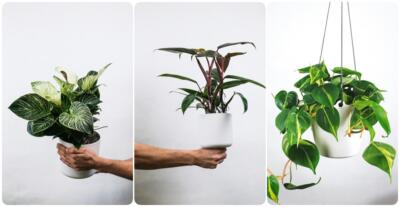


Houseplant care in winter comes down to giving plants as much light as possible, watering less and protecting them from two extremes: hot, dry air from radiators and cold from windows and draughts. The details depend on the temperature of the room and on the type of plant, because tropical foliage plants, cacti and succulents, and plants that flower in winter each need something different.
Houseplant care in winter at a glance:
- Light: move plants closer to the brightest window, keep their leaves free of dust and hang an LED grow light over any plant that keeps stretching towards the glass.
- Watering: water only when the top couple of centimetres of compost are dry, and use water at room temperature. Overwatering does more damage in winter than letting a plant go a little dry.
- Feeding: most houseplants need little or no feed until spring. Cyclamen in flower and poinsettias you plan to keep after Christmas are the exceptions.
- Heat and humidity: keep pots away from radiators, fires and cold glass, and offset dry air with a humidifier or with plants grouped on pebble trays.
Why is winter hard on houseplants?
Winter cuts the light that reaches a room at the same time as central heating dries the air. Lower light and cooler temperatures slow growth, so plants use far less water and food than in summer, and a summer routine of watering and feeding starts to work against them. Radiators and fires can scorch leaves, while plants left on cold windowsills or shut behind curtains overnight can be damaged by the cold. Many popular houseplants are tropical species that dislike sudden swings in temperature, so winter care is mostly a matter of taking the edge off these extremes and matching water and feed to slower growth.

How should you prepare houseplants for winter?
Autumn is the time to look over every plant thoroughly, including the stems, both sides of the leaves and any flowers, because winter is when indoor pests become more common. Plants that spent the summer outdoors need a particularly careful check before they come back in, and new plants are best kept apart from the rest until you are sure they have not brought pests with them. From autumn onwards, cut back watering gradually as the days shorten, for example from once a week to once a fortnight, and pause feeding until spring.
Where should you put houseplants in winter?
Give plants as much light as you can. Move them out of dark corners to brighter spots, ideally onto the brightest windowsill in the house, which in the UK usually means one facing south or west. Open curtains fully during the day and clean the windows inside and out. Dust on leaves also blocks light, so wipe them regularly with a damp cloth or a clean, soft paintbrush, or stand smaller plants under a lukewarm shower for a few minutes. A quarter turn of the pot every week or so gives each side of the plant its share of light.
Heat and cold are the two hazards on a winter windowsill. Keep plants out of the flow of warm air from radiators and away from fires, which scorch leaves and dry the air around them. Cold glass is just as damaging: leaves should not touch the window, and a plant left on the sill behind closed curtains spends the night in a pocket of cold air, so either keep the curtains open or move it into the room overnight. Keep plants away from cold draughts from doors and single-glazed windows, and out of the way when you open a window.
Do houseplants need extra light in winter?
Extra light makes sense when a plant struggles even in a place by the window. The signs are stretched, spindly stems with long gaps between the leaves, a plant leaning hard towards the glass, variegated leaves losing some of their pattern, and leaves turning yellow and dropping. Slower growth on its own is normal in winter; stretched, weak new shoots are what point to a shortage of light.
A full-spectrum ‘daylight’ LED is enough for houseplants, and no special grow light is needed. Fit it above the plants rather than to one side, because an overhead lamp helps stop them stretching towards the window. LED fixtures usually work best 30–60 cm from the foliage. A lamp hung too far away leaves plants stretching and yellowing, while one that is too close can scorch or bleach the leaves. Most houseplants do well with 12–14 hours of light a day, and a timer keeps the schedule steady.

How often should you water houseplants in winter?
There is no fixed winter schedule. Push a finger into the compost before watering: if the top couple of centimetres are dry, water; if the compost still feels damp, wait. For many houseplants this works out at about once a fortnight in winter, and cacti and succulents need even less. Winter-flowering plants such as the Christmas cactus and the poinsettia are the exception and need watering whenever the compost feels dry.
Overwatering is the bigger risk in winter, because roots that sit in cold, wet compost rot. Do not leave water standing in saucers, and empty decorative pot covers about ten minutes after watering. Use lukewarm water, or tap water left to stand at room temperature for a few hours, since cold water straight from the tap can shock the roots. Water the compost rather than the plant: with cyclamen, wetting the crown can make the plant rot, so water it from the base.
Should you feed houseplants in winter?
Most houseplants need little or no feed in winter. Pause feeding from autumn and start again in spring, when the plant begins to grow. Fertiliser given to a resting plant builds up in the compost as salts that can damage the roots, and extra feed in winter also encourages weak, spindly growth. Cacti and succulents get no feed at all during their winter rest.
A few winter-flowering plants are the exception. Cyclamen in flower can have a light feed about every two weeks. A poinsettia you plan to keep into the new year gets a high-potassium feed, such as tomato feed, once a month. The Christmas cactus, although it flowers in winter, is fed from April to the end of September and not while it is in bloom.
Too much fertiliser shows as brown leaf tips and edges, a white crust on the surface of the compost or on the outside of the pot, and slower growth. To fix it, run clear water through the compost until it drains from the bottom, and repeat several times, using at least the volume of the pot each time. In a small pot, replacing the compost is the easier fix.
How can you increase humidity for houseplants in winter?
Central heating dries the air, and low humidity is the most common cause of brown leaf tips. Dry air also encourages spider mites, which are most often noticed in winter on plants that are already weakened.
A small humidifier placed near the plants raises humidity directly. If it doubles as an essential oil diffuser, keep pets in mind: the ASPCA Animal Poison Control Center advises against using an essential oil diffuser at all in a home with birds, whose airways are very sensitive, and recommends keeping diffusers and oils out of reach of cats and dogs.
Grouping plants together creates a humid pocket around them. A tray of pebbles or clay granules topped up with water works locally, as long as the water stays below the top of the pebbles so the base of the pot never stands in it. Ferns, calatheas, marantas and orchids benefit from this most. A bathroom or kitchen also suits humidity-loving plants, provided it has enough light. Misting raises humidity only briefly, because the water evaporates within minutes, so it is no substitute for a humidifier or a pebble tray. Cacti and succulents should not be misted at all, especially in cold weather.
How do you protect potted plants on a balcony in winter?
Plants in pots are far more exposed to frost than plants in the ground. Soil in a border acts as a thermal blanket, while roots in a container are protected only by the compost and the walls of the pot, so they freeze and thaw quickly. Hardy container plants such as skimmia, winter heathers, hellebores, heucheras and winter pansies can stay outside if the pots are protected.
Wrap the sides of each pot in at least two layers of bubble wrap or horticultural fleece, tied with string, and leave the surface of the compost uncovered. Raise pots on pot feet so water drains away and air can circulate underneath. Grouping containers together and moving them against a south-facing wall or into a sheltered corner helps, because the building gives off some warmth and keeps off the wind.
Tender plants such as pelargoniums and fuchsias should come indoors before temperatures drop below 4°C. Pelargoniums overwinter in a bright, airy, frost-free place, where many keep flowering at 7–10°C. Water them sparingly, letting the compost dry out between waterings.

Which pests attack houseplants in winter?
Warm, dry homes suit indoor pests, and the ones most often found in winter are spider mites, fungus gnats, thrips, mealybugs, scale insects, aphids and whitefly. Check stems, both sides of the leaves and any flowers regularly through the winter.
Spider mites are up to 1 mm long. For most of the year they are yellowish-green with two dark markings, turning orange-red in autumn and winter. They feed mainly on the undersides of leaves, leaving fine pale mottling on the upper surface and, in heavy infestations, fine silk webbing. Badly affected leaves lose their green colour, dry up and fall. Ivy is especially vulnerable, scheffleras are often attacked in warm, dry rooms, and parlour palms are prone to them too. Washing the foliage with a strong spray of water in the shower or bath, including the undersides of the leaves, reduces light infestations. Higher humidity lowers the risk but will not control the mites on its own. The predatory mite Phytoseiulus persimilis is available as a biological control, and a small, heavily infested plant is often easier to replace than to save.
Fungus gnats show up as small, dark greyish-brown flies, 3–4 mm long, running over the compost or flying slowly around the pots. The adults do not harm plants. Their slender, whitish larvae, up to 6 mm long with black heads, feed mainly on dead roots and decaying organic matter in the compost. They can damage the roots of seedlings and tunnel into soft cuttings, but established plants with well-developed roots are unlikely to suffer. Letting the compost dry out between waterings, avoiding overwatering and repotting into fresh compost all reduce their numbers. Yellow sticky traps catch the adults, and nematodes (Steinernema feltiae) watered into the compost act against the larvae.
Thrips are slim insects up to 2 mm long. Leaves they feed on turn dull green and then develop a silvery-white sheen on the upper surface, usually dotted with tiny black specks of excrement. Feeding on shoot tips and flower buds distorts growth. To confirm them, shake the foliage over a sheet of white paper and look at what falls onto it, ideally with a magnifying glass.
If non-chemical methods fail, use only a product approved for amateur, home-garden use, and apply it exactly as the label says without increasing the strength. Products for professional use should never be used by untrained gardeners. Diseased plant material should not go on a home compost heap, because home heaps rarely reach the temperatures needed to kill most plant pathogens, so throw it away instead.
How do cacti and succulents overwinter?
Desert cacti need a winter rest that is cool, bright and dry. The ideal night temperature during the rest is 4–10°C, above freezing, with at least four to five hours of bright light a day, so the sunniest spot available suits them best. From late November until March they need almost no water: give a small amount only if a plant starts to shrivel. This cool, dry rest triggers flowering in mature cacti, which then bloom in spring or early summer, and watering starts again once the flower buds appear. Succulents also need far less water in winter, roughly every two to three weeks. Neither group needs extra humidity, since the dry air of a centrally heated home suits them well.
The Christmas cactus is a different case. It is a forest cactus from tropical habitats, and its care is covered in the next section.
Which houseplants flower in winter?
The best-known winter-flowering houseplants are short-day plants, which form flower buds in response to the shortening days of autumn: the Christmas cactus (Schlumbergera) and the poinsettia. Cyclamen, indoor azaleas and orchids also flower in the same season, and African violets can flower all year round in the right conditions.
The Christmas cactus flowers from late November to late January. Modern cultivars come in white, pink, yellow, orange, red and purple. Flower buds form after a cool rest at 12–15°C from mid-September until the buds appear. The plant needs at least 12 hours of continuous darkness a night to set buds, and artificial light after dark can stop it flowering. If the room stays at around 18°C or warmer through the autumn, it may not flower at all. In flower it prefers 18–20°C, and it should never drop below 10°C. Buds usually fall after swings in temperature, such as a warm day followed by a cold night, after a cold draught or when the plant is overwatered.
The poinsettia needs bright light without direct sun and a steady temperature of at least 13–16°C. A table a short distance from a living-room window suits it better than a windowsill above a radiator, and it should be kept away from draughty hearths, unheated porches and spots behind curtains where night temperatures fall. Water it sparingly, only when the surface of the compost feels dry, by standing the pot in tepid water for 10–20 minutes and then letting it drain. Most poinsettias are thrown away after Christmas because they are cheap to replace, but they can be kept. To flower again, a poinsettia needs artificial short days: from late September, fewer than 12 hours of light a day for eight to ten weeks, with the plant covered or moved to a dark room every evening. Broken stems and leaves release a milky sap that can irritate skin and eyes, so wear gloves when cutting it.
Cyclamen does best in a cool room at around 13–18°C with strong, bright light. Keep the compost moist and water from below or at the edge of the pot, because water on the crown can make the plant rot. Indoor azaleas flower for longer with night temperatures of 13–16°C, in a well-lit spot out of direct sun, with the compost kept evenly moist. Orchids need to be kept away from temperature extremes and draughts, because if they get too cold the flower buds fall off.
Which houseplants prefer a cool room in winter?
Some houseplants do better in a cool room than in a warm one. The aspidistra is happiest at 5–20°C, copes with very poor light, the dry air of a typical home and fluctuating temperatures, and suits a dark corner or a draughty hallway. In winter keep its compost slightly drier, without letting it dry out completely. The parlour palm (Chamaedorea elegans) can take cooler conditions in winter, when growth slows, but should stay above 10°C. Camellias grown in pots need a peat-free ericaceous compost and, in hard-water areas, rainwater rather than tap water, and in freezing spells they can be moved into a cold greenhouse or a cool conservatory. Whatever the plant, avoid moving it straight from a cold room into a warm one, because fast changes in temperature stress plants and can make them drop leaves.
Houseplant care in winter – frequently asked questions
What temperature is too cold for indoor plants?
Most houseplants do best at 12–18°C in winter. Many tropical plants suffer well before frost: the Christmas cactus and the parlour palm should stay above 10°C, and the poinsettia needs at least 13–16°C. Even a short exposure to below-freezing temperatures on the way home from a shop can harm a tropical plant, so wrap it well for the journey.
Do houseplants go dormant in winter?
Many houseplants rest as the light fades in late autumn. They grow less, need less water and may drop a few leaves they no longer need. Keeping up summer watering and feeding at this point only pushes out soft, leggy shoots. Winter-flowering plants such as the Christmas cactus and the poinsettia are the exception.
Can you repot houseplants in winter?
Repotting is possible at any time of year, but while growth is slow most plants are better left until early spring. The exceptions are plants whose roots are circling the pot and plants struggling in poor, old compost, which can recover in a fresh pot. Plants in flower are best left alone until they have finished.
Can you prune houseplants in winter?
Pruning is best left until late winter or early spring, when the plant wakes up and starts to put on new growth. Cutting back in late autumn or early winter, when growth slows, tends to produce weak, wispy shoots.
Why is my houseplant dropping leaves in winter?
Leaf drop usually follows a change: compost that is too wet or too dry, a cold draught, a sudden change in temperature, or a move from a bright spot to a darker one. The weeping fig is particularly prone to it. Moving a plant to a new position gradually, over a week or two, keeps leaf loss to a minimum.
Where plants can stand in winter depends largely on the layout of a home: how much light reaches the windows, where the radiators sit and how cold the sills get. When you plan a renovation and want to make room for plants from the start, find architects, interior designers and interior photographers in the PLNDesign directory.
See also:
- Kalanchoe care: light, watering, reflowering and propagation
- Plants poisonous to dogs: garden plants and houseplants to avoid