

Kalanchoe care comes down to a bright windowsill, free-draining compost and watering only after the compost has dried out. The kalanchoe sold in flower is usually Kalanchoe blossfeldiana, or flaming Katy, a winter-flowering succulent from Madagascar that forms new flower buds after about six weeks of long, completely dark nights. It can be propagated from stem and leaf cuttings, and some species produce ready-rooted plantlets along the edges of their leaves.
Kalanchoe at a glance:
- A bright windowsill suits it all year, with shade from hot afternoon sun in summer.
- Water only once the compost has dried out, empty the saucer and skip misting, because wet compost leads to root and stem rot.
- To flower again it needs about 14 hours of uninterrupted darkness every night for around six weeks.
- Kalanchoe is toxic to dogs and cats and can harm other pets that chew it, so it belongs out of their reach.
What is kalanchoe?
Kalanchoe is a genus of succulents in the stonecrop family, Crassulaceae. Most species come from Madagascar and tropical Africa, with others in south-east Asia and China, and they store water in fleshy leaves and stems. The plant usually sold in flower at garden centres and florists is Kalanchoe blossfeldiana, known as flaming Katy or Christmas kalanchoe, a bushy perennial from the mountains of north-east Madagascar that grows to about 40 cm.
The species is named after Robert Blossfeld, a German nurseryman and seed merchant from Potsdam, who introduced it to cultivation in 1932. The botanist Karl von Poellnitz described it two years later, in 1934.

Which kalanchoe species are grown as houseplants?
Kalanchoes kept indoors fall into three loose groups: those grown for their flowers, those that form plantlets on their leaves and those kept for their foliage.
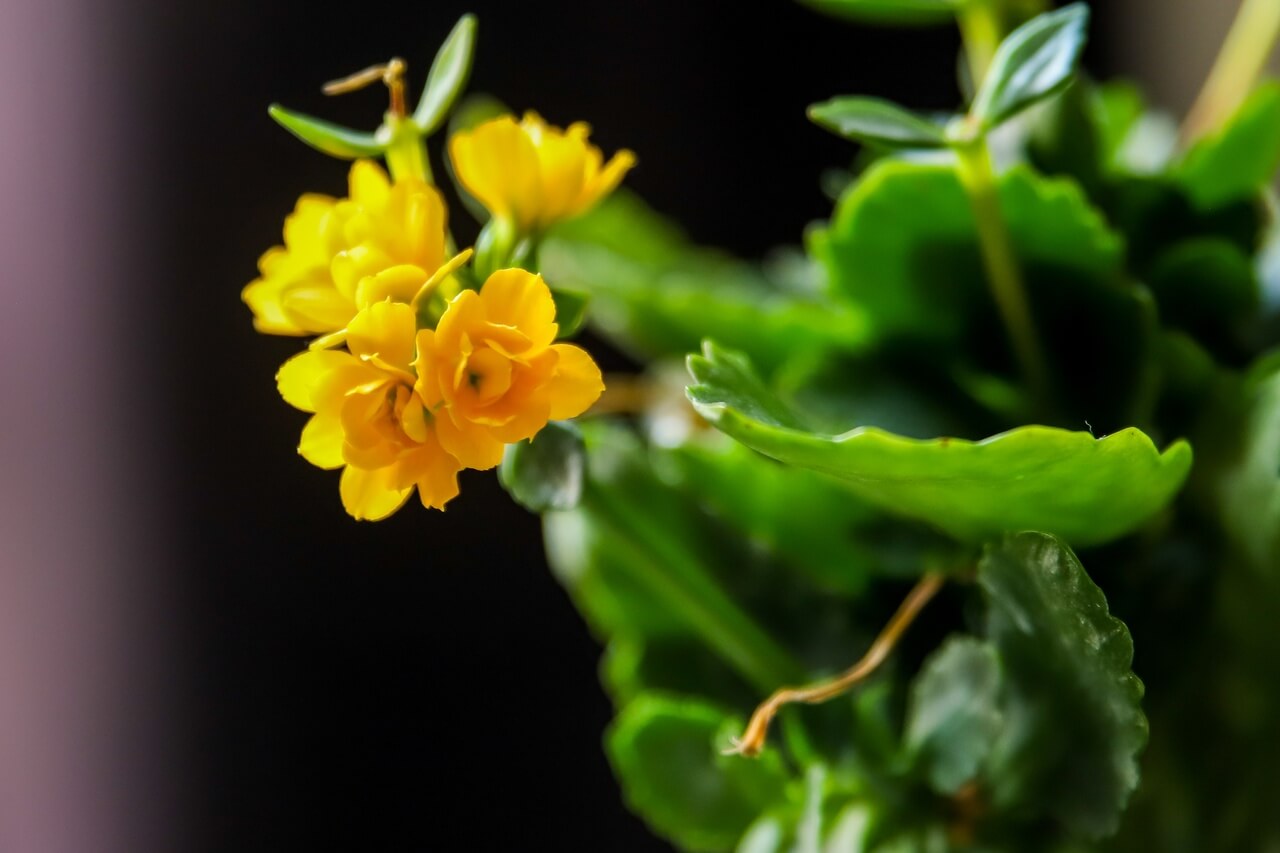
Kalanchoe blossfeldiana is the main flowering species. Dense clusters of small, four-petalled flowers in red, orange, yellow, pink or white rise above glossy, dark green leaves with scalloped edges. Double-flowered varieties are sold under names such as Calandiva and RoseFlowers.
Mother of thousands, Kalanchoe daigremontiana, grows to about 1 m and has long, narrowly triangular, toothed leaves blotched with purple underneath. Small plantlets form along the leaf edges, put out roots and drop off to start new plants. Kalanchoe pinnata carries its plantlets in the notches between the teeth of elliptical, scalloped leaves, which are single at the base of the stem and divided into leaflets higher up. ‘Pink Butterflies’, a variegated form of the hybrid Kalanchoe × houghtonii, has leaves marked with pink, cream and green, and pink plantlets along their edges.
Among the foliage kalanchoes, the panda plant, Kalanchoe tomentosa, has fleshy leaves covered in silvery felt, with brown or rusty spots along the edges. Kalanchoe orgyalis, called copper spoons, is a branching shrub whose spoon-shaped leaves carry fine cinnamon-coloured hairs that darken with age. Kalanchoe humilis has grey-green leaves marked with maroon spots and stripes. The paddle plant, Kalanchoe thyrsiflora from southern Africa, forms a rosette of upright, paddle-shaped leaves dusted with a white powdery coating, which works as a sunscreen and reduces water loss. Full sun, drought and cool nights turn the leaf margins red.
Where should you put a kalanchoe?
Give a kalanchoe the brightest windowsill you have. It tolerates strong sun, so a south- or west-facing window suits it as long as it gets enough water, and it needs six to eight hours of bright light a day to flower. Prolonged direct sun can scorch the leaves, so on the hottest summer days the plant is better shaded from the afternoon sun.
Normal room temperature suits kalanchoe, and it grows well between 10°C and 25°C. It should not stand anywhere colder than about 10°C. Cool nights are an advantage while it is in bloom: with nights of around 10–15°C and days of about 18–21°C, the flowers last longest.
The flowers are sensitive to ethylene, the gas given off by ripening and decaying fruit. Exposure makes them roll inwards and wilt, sometimes within 24 hours, so a kalanchoe should not stand next to the fruit bowl.
How often should you water a kalanchoe?
Water a kalanchoe only when the compost has dried out since the last watering, then water thoroughly and empty the saucer after about 15 minutes. In practice this usually means a little water once a week in summer and once a fortnight in winter. The plant stores water in its leaves and stems and tolerates drought, while compost that stays wet causes root and stem rot. The pot should never stand in water, although the compost should not get so dry that the plant wilts. Kalanchoe does not need misting.
Feed it during the growing season with a balanced liquid fertiliser or one made for succulents, diluted as the label directs, and stop feeding while the plant rests after flowering.
What compost and pot does a kalanchoe need?
Kalanchoe needs free-draining compost: a cactus and succulent mix, or a peat-free, loam-based compost with added grit. The pot must have a drainage hole. Repot in spring, after flowering, moving the plant into a pot one size larger.

How do you keep a kalanchoe in flower?
Indoors, a kalanchoe usually stays in flower for six to eight weeks. Cool nights extend the display, and so does leaving fading flowers in place while the plant is still in bloom, because picking them off can damage the buds that have yet to open.
Once flowering has finished, cut the flower stems back and lightly trim any leggy shoots to reshape the plant. It then rests for about a month, with less water and no feed.
How do you make a kalanchoe flower again?
Kalanchoe is a short-day plant: it forms flower buds only when the nights are long. To flower again, it needs about 14 hours of uninterrupted darkness every night for around six weeks, and bright light for the rest of each day. Lights switched on in the evening interrupt the dark period and stop buds from forming.
One way is to cover the plant every evening with a cardboard box or a black cloth and uncover it in the morning. A room where no lights are switched on after dark does the same job. Days of about 18–21°C and nights of about 16–18°C help, and flower buds should appear after about six weeks of long nights. A plant that spends the summer outdoors and then moves to a room without evening lighting can also set buds by itself for winter flowering.
Commercial growers use the same principle. They shade plants to bring them into flower or give them extra light to hold flowering back, which is why kalanchoes in bloom are on sale for most of the year.
How do you propagate kalanchoe?
Kalanchoe is propagated from stem tip cuttings, leaf cuttings, plantlets or seed. For stem cuttings, take 5–8 cm shoot tips from fresh green stems in spring or summer and leave them until the cut ends have dried. Dip the base in rooting hormone if you like, insert the cuttings into moist, free-draining compost and keep them warm, in bright but indirect light, for one to two months without disturbing them. Kalanchoe blossfeldiana can also be propagated from leaf cuttings.
Species that form plantlets do most of the work themselves. The plantlets of mother of thousands grow roots while still on the leaf and then drop off, ready to be planted in free-draining compost, ideally in spring. ‘Pink Butterflies’ is the exception: its pink plantlets lack chlorophyll and die, so it is propagated from stem cuttings.
Kalanchoe can also be raised from seed sown on the surface of the compost. At 20°C the seed germinates in about 15 days, and the seedlings flower for the first time after 9–10 months.
The paddle plant needs a different approach, because it is monocarpic: once it has flowered and set seed, the main rosette dies. Before that happens it usually forms small plantlets around its base, which can be separated, most often after flowering, and rooted in coarse sand, as can leaf cuttings. Seed is the fastest way to raise more plants: sow it in spring on fine, sandy compost and leave it uncovered.
Can kalanchoe grow outdoors?
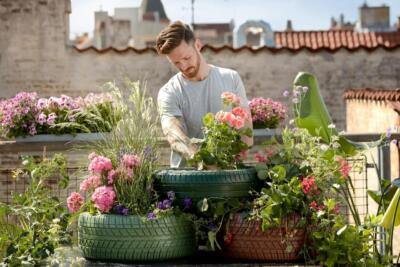
In climates with frosty winters, kalanchoe is a houseplant that can spend the summer outside. Move it out once frosts are over and nights stay above 10°C. It comes back indoors when night temperatures fall below 10°C again, and in any case before the first frost. Only in frost-free climates can it stay outdoors all year.

Outdoors it needs a bright, sheltered spot and free-draining compost. Water it sparingly and give it a small amount of fertiliser once a month. Grown outside in summer, kalanchoe flowers more profusely than indoors.
What are the most common kalanchoe problems?
Rotting roots and stems are the result of overwatering, and long, floppy stems a sign of too little light. If the plant fails to flower, the likely cause is that it has not had long enough nights.
Mealybugs, aphids and spider mites are the most common pests, and kalanchoe can also be attacked by vine weevil. Light infestations of mealybugs can be picked off or dabbed with a cotton bud soaked in alcohol, repeating the treatment as they reappear. A heavily infested plant is best thrown away so the pests do not spread to other houseplants. Good air circulation helps prevent powdery mildew.
Is kalanchoe poisonous to cats, dogs and people?
Kalanchoe is toxic to dogs and cats. Its flowers, leaves and stems contain bufadienolides, compounds that act on the heart. Eating the plant causes vomiting and diarrhoea and, rarely, an abnormal heart rhythm. The RHS also lists kalanchoe as harmful to rabbits, rodents and caged birds. Keep it where pets cannot reach it, and contact a vet straight away if an animal eats any part of it.
Kalanchoe is not edible. In people, eating a piece of most kalanchoes causes at most nausea and vomiting, although a few species contain compounds that affect the heart. If a child eats part of the plant, contact a doctor or your local poison centre.
Kalanchoe care – frequently asked questions
How long does a kalanchoe live?
Kalanchoe blossfeldiana is a perennial, so it does not die after flowering. Many plants are thrown away once the flowers fade only because getting them to bloom again takes some effort. Kept in good light and given long nights, the same plant can flower again in later years.
What is the difference between kalanchoe and Calandiva?
Calandiva is a name used for double-flowered varieties of Kalanchoe blossfeldiana. Their flowers have two or more layers of petals, while single-flowered kalanchoes have one, but both belong to the same species.
Did a kalanchoe go to space?
Yes. In 1979 a mature kalanchoe and flowering tulips were sent to the Soviet space station Salyut 6 to lift the spirits of cosmonauts Valery Ryumin and Vladimir Lyakhov during their six-month mission. The crew named the kalanchoe the ‘life tree’.
A kalanchoe needs a bright windowsill, because in a dark corner it will not flower again and its stems will stretch, so it pays to plan places for plants together with the rest of the interior. Find architects, interior designers and interior photographers in the PLNDesign directory.
See also:
- Plants poisonous to dogs: garden plants and houseplants to avoid
- How to grow honeysuckle: planting, pruning and care