

Monstera deliciosa care comes down to bright, indirect light, an open, free-draining compost and watering only once the top few centimetres have dried out. The Swiss cheese plant is a climber from the tropical forests of southern Mexico and Central America, grown indoors for its large, glossy leaves, which develop splits and holes as the plant matures. A large plant also needs a sturdy pole to climb.
Monstera deliciosa at a glance:
- Bright, indirect light near an east- or west-facing window suits it best. Direct sun scorches the leaves, and in poor light new leaves come out with few or no holes.
- Water only when the top few centimetres of compost are dry, and never leave the pot standing in water, because soggy compost rots the roots.
- Holes in the leaves usually appear once a plant is a few years old and has enough light, so young plants tend to have solid leaves.
- Every part of the plant contains calcium oxalate crystals, and it is toxic to cats and dogs, so keep it out of reach of pets and small children.
What is Monstera deliciosa?
Monstera deliciosa is an evergreen climber from the arum family (Araceae), native to the tropical forests of southern Mexico and Central America. In the wild it clings to tree trunks with its roots and climbs up to 20 metres. Indoors it usually reaches 2–3 metres, and given time and support it can grow to the ceiling.
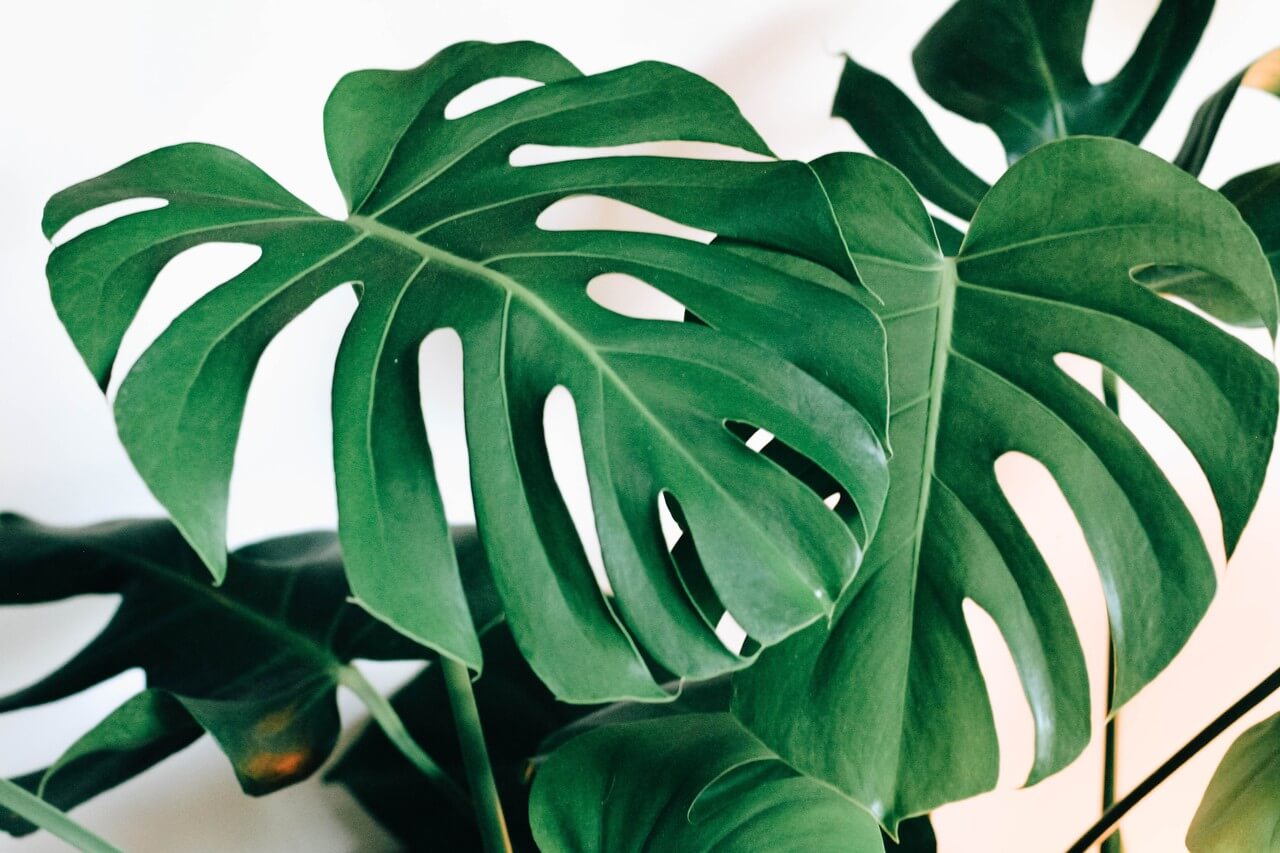
Its large, glossy leaves sit on long stalks. On a mature plant they are deeply split and perforated and measure 25–90 cm long and up to 75 cm across, while young plants have smaller, entire leaves. The species was described scientifically in 1849. The genus name comes from the Latin for ‘monstrous’ or ‘abnormal’, and deliciosa refers to the edible fruit. The common name, Swiss cheese plant, comes from the holes in the leaves.
Where should you put a monstera?
A monstera needs bright, indirect light and shelter from direct sun, which scorches the leaves. A room with an east- or west-facing window works well, and the plant can stand up to three metres from the glass, as long as furniture does not block its light. In summer, keep it out of harsh midday sun. It copes with lower light, but grows more slowly there and its new leaves have fewer holes.
It does best at a steady 18–25°C all year, away from cold draughts and direct heat, and at least 1.5 metres from a working radiator. Below 12°C its leaves can turn black. It prefers humid air, and in a centrally heated home dry air can brown the leaf edges. Misting the leaves, standing the pot on a tray of moist gravel or grouping it with other plants raises the humidity around it.
Young, compact plants fit on a shelf, side table or plant stand, and can be grouped with houseplants whose leaves contrast with theirs, such as calatheas, marantas or aglaonemas. A mature monstera belongs on the floor, in a large, heavy pot with a pole and space around it, because over time it can grow several metres tall and almost as wide.

How often should you water a monstera?
Water a monstera when the top 5–7 cm of compost has dried out, which you can check with a finger or a wooden stick pushed into the pot. In summer that usually means watering every week or two, and slightly less often in winter. A fixed schedule ignores the humidity of the room and the type of pot, and both matter: compost in a terracotta pot dries out faster than in a plastic one, because the porous walls also let water evaporate.
Water from the top, pouring slowly over the compost until water runs out of the drainage hole, then empty the saucer or outer pot straight away. A monstera tolerates a short dry spell better than roots sitting in wet compost. Overwatering rots the roots, and fungus gnats breed in compost that stays constantly wet. Use water at room temperature, ideally rainwater or filtered water if your tap water is hard.
What compost does a monstera need, and when should you repot it?
A monstera needs an open, free-draining, slightly acidic mix (pH 5–6) that does not stay wet around the roots. One part peat-free ericaceous compost to two parts orchid compost works well, as does a peat-free houseplant mix with bark and perlite. Heavy, compacted garden soil holds too much water.
The pot must have a drainage hole. A layer of crocks at the bottom does not improve drainage and only takes up room the compost could use. Choose a new pot just a few centimetres wider than the old one, about 2.5–5 cm for pots up to 25 cm across, because compost in an oversized pot stays wet and can rot the roots. A tall plant on a pole is top-heavy, so the pot also needs enough weight to stop it toppling over.
A newly bought monstera can stay in its pot for a year or two. After that it needs repotting every few years, once the roots fill the pot or start growing out of the drainage holes. Spring is the best time. Tease out any roots circling the root ball, remove loose old compost from its sides and top and replace it with fresh mix. For a plant too large to repot, replacing the top 2–4 cm of compost with fresh mix can stand in for repotting.
How should you feed a monstera?
Feed a monstera from April to September with a balanced liquid fertiliser, about once a month, diluted as the label directs. It is sensitive to a build-up of fertiliser salts in the compost, so there is no point exceeding the recommended dose. In autumn and winter, when growth slows, stop feeding.
Does a monstera need a moss pole?
A large monstera needs support. Without it, the stems sprawl along the floor towards the light and the leaves stay small. A sturdy moss pole, or a wooden stake wrapped in sphagnum moss, gives the aerial roots something to grip, and keeping the moss moist lets the stems root into it. Once the plant attaches itself, its leaves grow noticeably larger. Tie the stems loosely with soft plant ties. The easiest time to add a pole is at repotting: push it into the pot first, set the plant beside it and firm the compost around both.
If a monstera outgrows its space, cut it back in spring. For a while afterwards the new stems produce smaller leaves with fewer holes, until the plant settles. Cutting the main stem back by about a third every three years keeps the plant bushier.
Should you cut monstera aerial roots?
No. Leave them on: aerial roots are a normal part of how the species grows, and in the wild they anchor the stems to tree trunks as the plant climbs. Long roots can be guided down into the compost or onto a moist moss pole, where they take up water.
Why does my monstera have no holes in its leaves?
Solid leaves usually mean the plant is still young or short of light. The splits and holes, called fenestrations, appear on new leaves once a monstera is a few years old, provided it gets enough light. A young plant’s first leaves are heart-shaped and entire, and an older plant kept in deep shade keeps producing leaves with few or no holes. If new leaves come out small and solid, move the plant closer to a window with bright, indirect light. Botanists have proposed several explanations for the holes: they may let light through to the lower leaves as the plant climbs, reduce wind damage or help the leaf take up water.

Why are my monstera leaves turning yellow or brown?
Yellow leaves often point to a root problem: rot after overwatering, or drought. If the leaves keep yellowing and the plant has put out no new growth for six months, take it out of the pot and look at the roots, which are brown or black and mushy when rotten. Sap-sucking pests also turn leaves yellow, while a single old leaf yellowing at the base of the plant is normal ageing. A yellow leaf will not turn green again, so cut it off cleanly about 2.5 cm from the main stem.
Brown, crisp leaf edges usually mean the air is too dry, while thin, crisp brown patches can be sun scorch. Leaves that turn black have usually been exposed to temperatures below 12°C.
What pests and diseases affect a monstera?
The main pests on an indoor monstera are mealybugs, scale insects, glasshouse red spider mite and thrips. Mealybugs look like small tufts of white cotton on the stems and leaves and leave sticky honeydew behind, while scale insects form brown or beige bumps. Red spider mite causes fine, pale mottling on the upper surface of the leaves, the mites themselves sit on the underside, and heavy attacks also leave fine webbing. Thrips turn the upper surface a silvery white, flecked with small dark droppings.
Red spider mite thrives in warm, dry conditions, so raising the humidity in winter by misting, using a tray of moist gravel or running a humidifier lowers the risk, although that alone will not get rid of the mites. Keep the bottom of the pot above the water in the tray. Wiping the leaves regularly with a damp cloth removes dust and insects, and it is a good moment to check the undersides.
On a lightly infested plant, dab mealybugs with a cotton bud dipped in rubbing alcohol. Try it on a small area first, because alcohol can damage the leaves. For a heavy infestation, use a product approved for houseplants and follow the label exactly. Diseases are rare. Bacterial leaf spot shows as dark brown spots with yellow edges and spreads with water; keeping the plant warm, with space and good air movement around it, helps prevent it.

Is monstera poisonous to cats, dogs and people?
Yes. Every part of Monstera deliciosa contains needle-like calcium oxalate crystals. In people, chewing or swallowing part of the plant can cause immediate burning pain and swelling of the lips, mouth, tongue and throat, with drooling and difficulty swallowing, speaking or breathing. The sap also irritates skin and eyes, so wear gloves when pruning the plant or taking cuttings.
The ASPCA lists the plant as toxic to dogs, cats and horses. The signs include irritation, pain and swelling of the mouth, tongue and lips, heavy drooling, vomiting and difficulty swallowing.
Keep the plant out of reach of small children and pets. If someone’s lips or tongue swell, or they struggle to breathe or swallow after eating part of it, get urgent medical help. In the UK, the NHS advises calling 999 or going to A&E if you think someone has swallowed something harmful, calling NHS 111 if you are not sure, and not trying to make the person sick. If a pet has chewed the plant, the PDSA advises calling your vet straight away and not making the animal sick unless the vet says so. Animal PoisonLine is another source of advice for pet owners in the UK.
Only fully ripe fruit is edible. It takes a year or more to ripen and tastes like a blend of pineapple and banana. Unripe fruit contains calcium oxalate crystals that irritate the mouth and throat, and even ripe fruit can bring on hives in some people. On a houseplant, fruit is very unlikely.
How do you propagate a monstera?
The easiest method is a stem cutting. Take a piece of stem 12–18 cm long with at least one node, the point where leaves and aerial roots grow from, and two leaves, ideally with an aerial root as well. Cut with a sharp, clean knife or sterilised secateurs, between spring and late summer.
To root the cutting in water, stand it in a jar with the node under water and the leaves above it, in bright, indirect light. Roots can take up to three weeks to appear, and once they are about 10 cm long the cutting can go into a light, moist mix. It can also go straight into a 12 cm pot of moist compost in bright, indirect light. A large plant can be propagated by air layering, which roots a stem while it is still attached to the parent, and monstera can be grown from seed, although the seedlings develop slowly and the method is rarely used.
Which Monstera deliciosa varieties can you buy?
Alongside the plain green form, there are variegated cultivars. ‘Variegata’, which holds the RHS Award of Garden Merit, has leaves marbled and splashed with creamy white, and ‘Thai Constellation’ has cream speckles that look like stars in a night sky. Variegated plants need more light than the green form. Other cultivars on sale include ‘Mint’ and ‘Yellow Marilyn’.
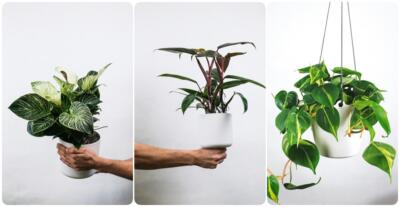
The name Monstera borsigiana also turns up in shops, but botanically it is a synonym of Monstera deliciosa, so it means the same species. Monstera adansonii, sold as Swiss cheese vine or monkey mask plant, is a separate species: a smaller, faster-growing climber with heart-shaped leaves pierced by oval holes. The plant sold as mini monstera is Rhaphidophora tetrasperma, from the same arum family but a different genus.
Monstera deliciosa care – frequently asked questions
Is a monstera good for beginners?
Yes. The RHS describes Swiss cheese plants as easy to look after, and once a monstera has settled in it tolerates a range of conditions.
What should you not do with a monstera?
Avoid the four things the RHS lists as its dislikes: overwatering, hard tap water, direct summer sun and very dry air.
Why is my monstera dripping water from its leaves?
Droplets on the leaf tips are guttation. The plant pushes out excess water through special pores when its roots take up more than the leaves can lose, usually at night or early in the morning, in warm, humid conditions or when the compost stays too wet. It is natural and harmless. Wipe the drops off with a damp cloth so the minerals in them do not mark the leaves.
Can a monstera go outside in summer?
Yes, as long as the temperature stays above 10–15°C. Put it in a sheltered, partly shaded spot and get it used to brighter light gradually, otherwise the leaves can burn, then bring it back indoors before the weather turns cold.
Does a monstera flower indoors?
Rarely, usually only once a plant has grown large and mature. The flower is a cream-white spathe wrapped around a spadix 10–15 cm tall.
A mature monstera on a pole takes up a fair amount of floor space and needs bright, indirect light, so its spot is worth planning along with the layout of a living room or office. When you are furnishing an interior, a designer can make room for plants from the start. Find architects, interior designers and interior photographers in the PLNDesign directory.
See also:
- Kalanchoe care: light, watering, reflowering and propagation
- How to grow honeysuckle: planting, pruning and care