

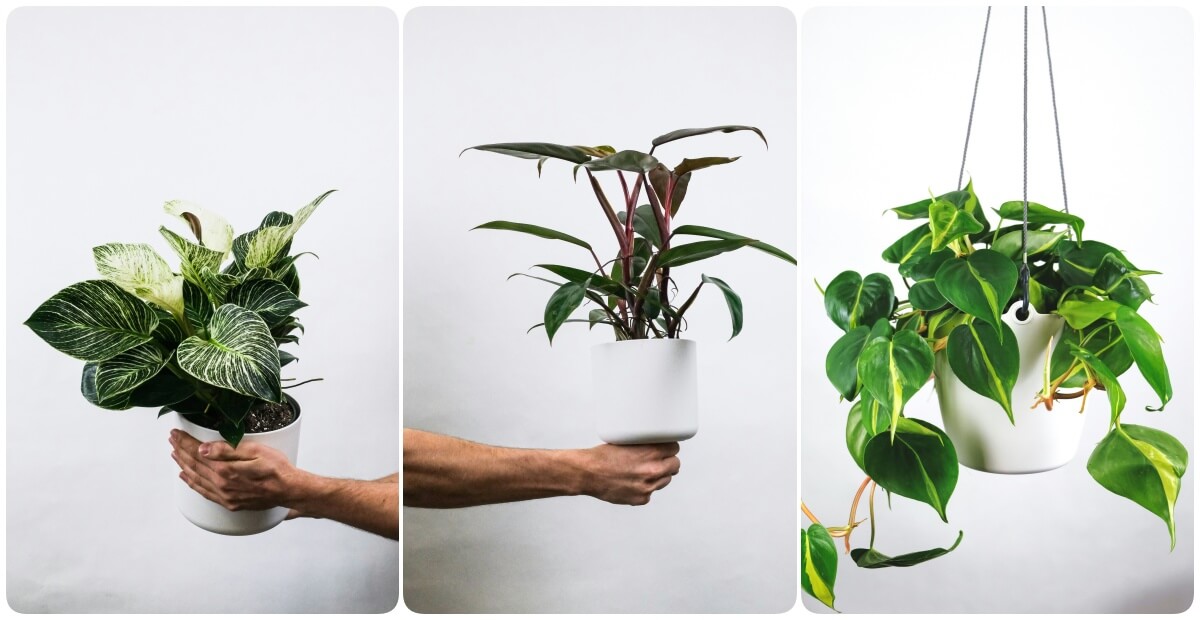
Philodendron care comes down to three things: bright but indirect light, a loose, free-draining compost and watering only once the top of the compost has dried out. These tropical members of the arum family grow well as houseplants at ordinary room temperatures, as long as they stay at 15°C or above and away from hot radiators and cold draughts. Every part of the plant contains calcium oxalate crystals, which makes philodendrons poisonous to people, cats and dogs.
Philodendron at a glance:
- A genus of more than 600 species from the tropical Americas, with climbing, trailing, bushy and ground-creeping forms.
- Bright, indirect light and a minimum of 15°C keep a philodendron growing well; direct summer sun scorches the leaves and low light makes the stems leggy.
- Water when the top of the compost is dry, never leave the pot standing in water and feed with a general houseplant fertiliser from April to September.
- Poisonous if chewed or eaten: the crystals cause pain and swelling in the mouth of people and pets, and the sap can irritate skin and eyes.
What is a philodendron?
Philodendron is a genus of evergreen plants in the arum family, Araceae, native to the tropical Americas and the West Indies, with more than 600 accepted species. The name joins the Greek words philo, ‘love’, and dendron, ‘tree’, which fits the way most species live in the wild: as epiphytes or hemiepiphytes clambering over trees and other plants, and only rarely rooted in the ground. Their aerial roots do two jobs, anchoring the stem to a support and taking up water and nutrients.

Indoors, philodendrons fall into two broad groups. Climbing and trailing types have long, flexible stems and smaller leaves, while bushy, self-heading types grow upright and carry far larger leaves, up to a metre long in Philodendron bipinnatifidum. A third, smaller group creeps: Philodendron gloriosum spends most of its life growing horizontally across the forest floor. Leaf shape changes with age as well, since juvenile and adult leaves of the same species can look very different and adult leaves are usually much bigger. In 2018 botanists proposed moving the group of species that includes P. bipinnatifidum and Xanadu into a separate genus, Thaumatophyllum, which is why Xanadu is also listed as Thaumatophyllum xanadu.
Which philodendrons make the best houseplants?
Houseplant philodendrons differ in habit as much as in leaf colour, and habit decides whether a plant will need a pole, a hanging pot or floor space.
- Heartleaf philodendron (Philodendron hederaceum, also known by its older name P. scandens): a climber with glossy, heart-shaped leaves, usually 8–15 cm long on a houseplant. It is easy to grow, climbs a pole or trails from a shelf, and holds the RHS Award of Garden Merit under the name P. scandens.
- ‘Brasil’ and ‘Lemon Lime’: cultivars of the heartleaf philodendron. ‘Brasil’ has a yellow to light-green stripe through the centre of each leaf, while ‘Lemon Lime’ has bright yellow to chartreuse foliage.
- Velvet philodendron (P. hederaceum var. hederaceum), sold in the houseplant trade under its former name, Philodendron micans: velvety leaves on climbing stems.
- Blushing philodendron (P. erubescens): red stems and heart-shaped leaves up to 40 cm long. The species climbs, while most of its cultivars, among them ‘Burgundy’, ‘Imperial Red’, ‘Red Emerald’, ‘Pink Princess’ and ‘White Princess’, are self-heading rather than climbing. ‘Red Emerald’ is one of the exceptions: a climber with deep red leaf stalks. ‘Pink Princess’ has dark purplish-green leaves variegated with pink, and ‘White Princess’ green leaves splashed with white.
- ‘Birkin’: a compact, slow-growing, self-heading philodendron with glossy dark green leaves marked by creamy white, yellow or pale green pinstripes that become stronger as the plant matures.
- Xanadu (Philodendron xanadu, syn. Thaumatophyllum xanadu): glossy, deeply lobed leaves up to 40 cm long in a dense clump that can reach 1.5 m tall and wide.
- Philodendron bipinnatifidum: a bushy species with huge upright leaves up to a metre long that needs no support.
- Philodendron gloriosum: a creeping species from Colombia with velvety, heart-shaped leaves, pale veins and pink-tinged margins.
Where should you put a philodendron?
Put a philodendron in bright but indirect light, out of direct summer sun, which can scorch the leaves. Philodendrons survive in darker spots, but in low light they grow leggy with fewer, smaller leaves, and variegated cultivars such as ‘Birkin’ lose much of their pattern.
Ordinary room temperatures suit them. The blushing philodendron and ‘Birkin’ do best between 18 and 29°C, and the temperature around any philodendron should not fall below 15°C. Keep the pot away from hot radiators and cold draughts.
Does a philodendron need high humidity?
No. Philodendrons prefer moderately humid air but cope with the lower humidity of most homes, and the heartleaf philodendron tolerates dry air. Air that is too dry shows on the plant as brown leaf tips.
To raise the humidity around a philodendron, stand the pot on a saucer of damp pebbles. Misting is optional, and the leaves should not stay wet for long, because foliage that stays damp is prone to leaf spot.
How often should you water and feed a philodendron?
There is no fixed schedule. Water a philodendron when the top of the compost has dried out, which is easy to check by pressing a finger into it, and water less often in winter. Use rainwater or filtered water where possible, ideally at room temperature, and empty the saucer afterwards, because a philodendron left standing in water is prone to root rot. Feed only in the growing season, from April to September, with a general houseplant fertiliser.

What compost does a philodendron need, and when should you repot it?
A philodendron needs a loose, free-draining and slightly acidic compost with a pH of 5–6. A simple mix is two parts orchid compost to one part peat-free ericaceous compost. Use a pot with drainage holes. A layer of crocks or gravel at the bottom does not improve drainage, as it reduces the volume of compost and disrupts capillary action; a crock placed over the hole only stops compost falling through.
A philodendron can stay in the same pot for at least a couple of years, until the roots become densely packed. Repot in spring, into a pot only a few centimetres larger than the rootball.
Should a philodendron climb or trail?
Climbing philodendrons can do either. Tied to a moss pole that is kept moist, they grow upright and their aerial roots eventually grow into the moss; left to their own devices, the long stems trail from a hanging pot or a high shelf. Bushy, self-heading species need no support, training or pruning.
Prune climbing and trailing philodendrons in spring, just as they come into growth, if they have outgrown their space. Cut just after a leaf node and keep the healthy pieces for cuttings.
How do you propagate a philodendron?
Philodendrons are propagated from stem cuttings taken between spring and late summer. Cut a piece of stem about 10 cm long just below a leaf joint, strip off the lower leaves and stand the cutting in water. Roots usually appear within a couple of weeks, and the young plant then goes into the same compost mix as an adult philodendron.
Why are my philodendron’s leaves turning yellow or brown?
Each of these symptoms points to a likely cause:
- Yellowing leaves and wet, heavy compost: overwatering or poor drainage, which can lead to root rot and, in severe cases, the collapse of the plant. Let the top of the compost dry before watering again.
- Pale, scorched patches: direct sun. Move the plant out of direct light.
- Long, bare stems with fewer, smaller leaves: too little light. Variegated cultivars also lose their pattern.
- Brown leaf tips: air that is too dry.
- Dark spots that spread: leaf spot disease, more likely when the leaves stay wet.
- Dead spots and distorted new leaves after a cold spell: chilling injury. Heartleaf philodendrons show damage after three or four days at around 5°C.

Which pests and diseases attack philodendrons?
The pests to watch for are mealybugs, red spider mites, scale insects and thrips, so check the undersides of the leaves regularly. Mealybugs look like white, cottony masses in the leaf axils and on the undersides of leaves, and they can also live on the roots. Scale insects are round to oval bumps up to 2 mm across, light to dark brown. Thrips leave curled or distorted leaves with silver-grey scars where they have fed.
Bacterial leaf spot starts as tiny, water-soaked areas that grow and darken, and once it reaches the leaf stalks the leaves can collapse. Remove infected leaves as soon as the symptoms appear and discard badly affected plants, which are unlikely to recover. Root rot, which comes with wet compost, turns the leaves yellow, while dasheen mosaic virus shows as pale streaks, mosaic patterns and distorted new leaves.
Is a philodendron poisonous to people, cats and dogs?
Yes. All parts of a philodendron contain needle-like calcium oxalate crystals. Chewing or eating any part causes immediate pain or a burning sensation and swelling of the lips, mouth, tongue and throat, and the swelling can lead to heavy drooling and difficulty breathing, swallowing or speaking. The sap can cause contact dermatitis and eye irritation, and in rare cases damage to the cornea, so wear gloves when cutting or repotting the plant.
In cats and dogs, chewing a leaf causes irritation, pain and swelling of the mouth, tongue and lips, excessive drooling, vomiting and difficulty swallowing; animals may also paw at the mouth and go off their food. Severe throat swelling that makes breathing difficult is rare, and most animals make a full recovery.
For people, the US National Capital Poison Center recommends rinsing the mouth with water and spitting out any plant pieces, washing affected skin with soap and water for 15 minutes and rinsing an affected eye with water for at least 15 minutes. Call emergency services if the person is drooling heavily, has severe swelling in the mouth or struggles to swallow or breathe, and see a doctor if symptoms are severe or do not improve. If a pet has chewed a philodendron, call a vet straight away. The safest place for the plant is out of reach of children and pets.
Philodendron care – frequently asked questions
Is a philodendron the same as a monstera?
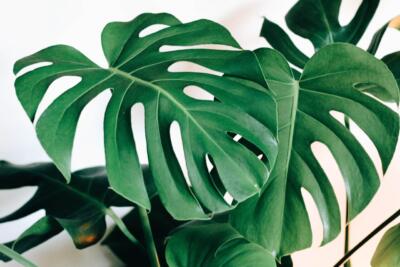
No. Both belong to the arum family, and Monstera deliciosa is also known as ‘split-leaf philodendron’, but it is not a philodendron. Its mature leaves are perforated with holes, some of which reach the edge of the leaf.
Do philodendrons flower indoors?
Rarely. A heartleaf philodendron grown as a houseplant seldom produces an inflorescence. When it does appear, it is a spadix enclosed in a hood-like spathe, white or green on the paler side and red or crimson on the darker.
Do philodendrons clean the air?
Not in a measurable way at home. Laboratory tests in sealed chambers, such as the one NASA ran in 1989, showed plants removing compounds like formaldehyde, but a review by Drexel University researchers Bryan Cummings and Michael Waring found that the normal exchange of indoor and outdoor air removes them far faster. Matching it would take between 10 and 1,000 plants per square metre of floor.
A philodendron is easiest to plan together with the rest of the room: a bright spot with indirect light, away from radiators and draughts, and space for a moss pole if it climbs. When plants are to have a permanent, well-considered place in a home you are furnishing, a designer can build them into the layout from the start. Find architects, interior designers and interior photographers in the PLNDesign directory.
See also:
- Houseplant care in winter: light, watering, heat and pests
- Kalanchoe care: light, watering, reflowering and propagation