

Succulent care comes down to four things: the sunniest window in the home, a gritty compost that drains quickly, a thorough watering only once the compost is dry, and a cool, dry rest in winter. Succulents store water in fleshy leaves, stems or roots, which is why overwatering is the most common cause of death. The same rules cover jade plants, echeverias, aloes, haworthias and snake plants, with a few exceptions such as aeoniums, lithops and the Christmas cactus.
Succulent care at a glance:
- Light: a south-, east- or west-facing windowsill with at least three hours of sun a day, and light shading behind south-facing glass in high summer.
- Water: soak the compost once it is dry to the touch, let the pot drain and never leave it standing in water.
- Compost and pot: peat-free cactus compost or a loam-based mix with grit, in a pot with drainage holes only slightly larger than the root ball.
- Winter: from November to early March, a bright spot with nights at 8–10°C, almost no water and no feed, which is what brings many succulents into flower.
What are succulents?
Succulents are plants that store water in fleshy tissue, in their leaves, in their stems or, in some species, in swollen roots, so they can survive long periods without rain. The name comes from the Latin succulentus, ‘juicy’, which derives from succus, ‘juice’ or ‘sap’, and English has used it for plants since the 1820s. In some succulent organs water makes up 90–95% of the tissue.
The same features that store water also save it. Succulents have a thick, almost impermeable outer cuticle, fewer stomata (the pores through which leaves lose water vapour) and leaves that are often small, cylindrical or missing altogether. Many also use crassulacean acid metabolism, or CAM: they keep their stomata closed during the day and open them at night, store the carbon dioxide taken in as malic acid and use it for photosynthesis the next day. Far less water escapes this way, but the trade-off is slow growth, which is why most succulents take years to fill out.
Most succulents come from deserts and semi-arid regions, though they also grow on steppes, in mountains, on sea coasts and, as epiphytes, on the branches of trees. They are found on every continent except Antarctica, and South Africa alone has about a third of all succulent species. Frost is the limit for most of them: ice crystals form in the tissue and puncture the cells, which die when the plant thaws.
The word succulent describes how a plant is built rather than which family it belongs to, and succulents appear in about 60 plant families. In the cactus family, the ice plant family (Aizoaceae) and the stonecrop family (Crassulaceae), most species are succulent, and others come from the spurge, asphodel and dogbane families, among them euphorbias, aloes and desert roses. Succulents are also grouped by the organ that holds the water: leaf succulents such as jade plants, echeverias, aloes and agaves; stem succulents such as cacti and many euphorbias; and root succulents with swollen roots or tubers, such as some pelargoniums.
What is the difference between cacti and succulents?
Every cactus is a succulent, but most succulents are not cacti. Cacti form a single family, Cactaceae, whose members store water in thick, fleshy stems, usually carry spines and have few or no leaves, and almost all of them come from the Americas. Aloes, jade plants and echeverias are succulents from other families. In horticultural use, the word succulent often means everything apart from cacti.
Euphorbia trigona, the African milk tree, is sold under the name cathedral cactus, but it is a euphorbia. It has upright, two- or three-sided stems marked with pale green chevrons, pairs of short thorns along the ridges and small, teardrop-shaped leaves between them, and in cultivation it reaches 1.5–3 m. Like other euphorbias, it has a poisonous latex that irritates the skin.

Which succulents are popular houseplants?
Popular indoor succulents include jade plants, echeverias, aloes, haworthias, kalanchoes, snake plants and string of pearls, along with aeoniums, desert roses, lithops and ZZ plants. They share the basic rules of succulent care, but their needs for light and water differ enough to be worth checking before choosing a spot.
The jade plant (Crassula ovata) is a tree-like succulent with thick, fleshy, oval leaves, native from south-eastern Mozambique to South Africa’s Eastern Cape. It wants full sun, ideally by a south- or west-facing window, and it can live for many years, with mature plants producing starry white or pink flowers. The cultivar ‘Gollum’, which holds the RHS Award of Garden Merit, has tubular, bright green leaves that are often tipped with red.
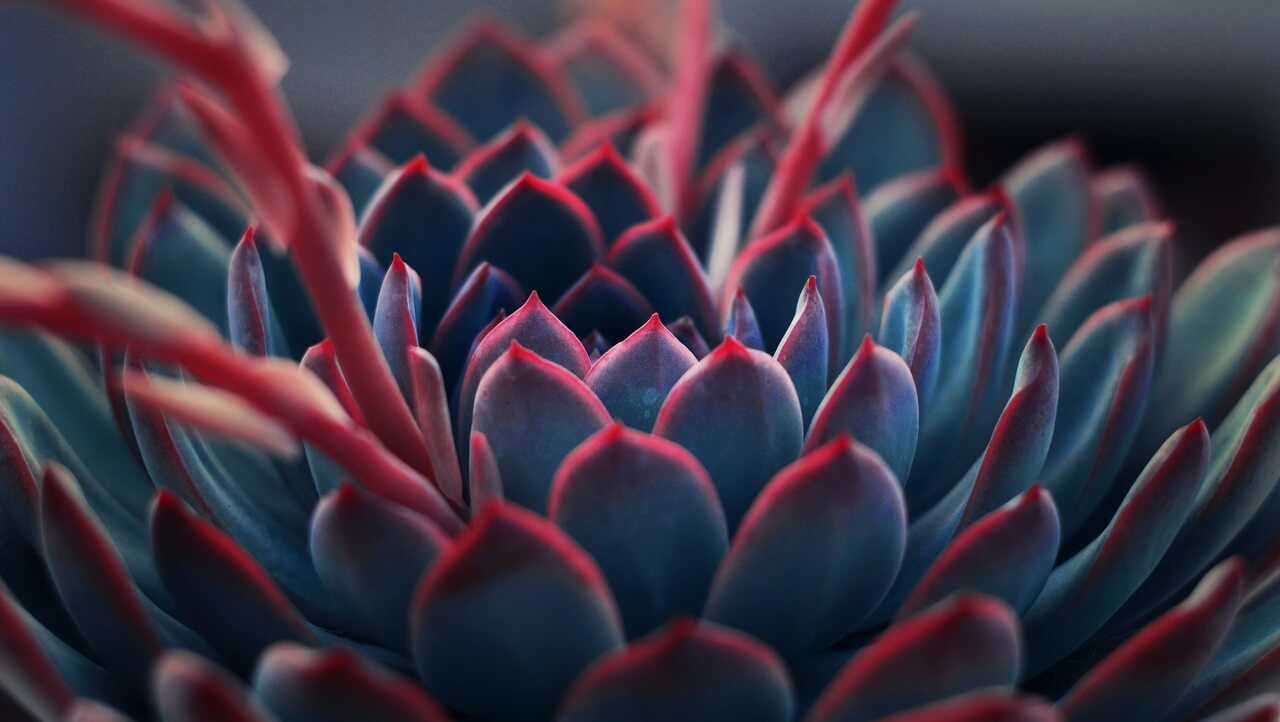
Echeverias form tight, rose-shaped rosettes of fleshy leaves. ‘Lola’, for example, has grey-green leaves with a white, waxy coating and a pink blush, and Echeveria laui, from the Mexican state of Oaxaca, is grown for its pink colouring. Echeverias need full sun, and like jade plants they propagate readily from single leaves.
Aloes grow wild in tropical and southern Africa, Madagascar, the Arabian Peninsula and on islands in the Indian Ocean. Most form rosettes of thick, fleshy leaves that range from grey to bright green and are sometimes striped or mottled. The lace aloe (Aristaloe aristata, formerly Aloe aristata) is a small, tufted plant up to 50 cm tall, with leaves spotted white and tipped with a soft white spine.
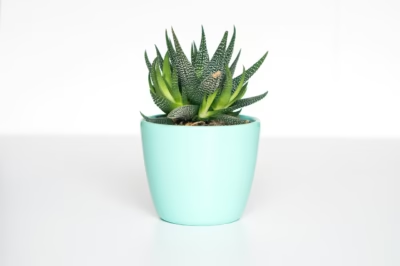
Haworthias are small succulents from southern Africa, with single rosettes usually 2.5–7.5 cm across and leaves marked with lines, bumps, stripes or dots, as on the zebra haworthia (Haworthia fasciata). They are better suited than most succulents to the lower light levels of a home and do well by an east- or west-facing window that gets a few hours of direct sun. Many produce offsets freely and form clumps that can be divided.
The flaming Katy (Kalanchoe blossfeldiana) is grown for its clusters of tubular red flowers, which open in spring. Indoors it does best in bright, filtered light, and it can spend the summer outside in partial shade as long as temperatures stay above 10–15°C.
The snake plant, or mother-in-law’s tongue, was known as Sansevieria trifasciata until 2017, when botanists moved it to the genus Dracaena as Dracaena trifasciata. It comes from tropical West Africa, from Nigeria to the Congo, and tolerates low light and irregular watering. Cultivars include ‘Laurentii’ and ‘Moonshine’.
String of pearls (Curio rowleyanus, formerly Senecio rowleyanus) comes from dry parts of South Africa’s Cape provinces. Its trailing stems carry spherical, pea-sized leaves that hold water, so it looks best in a hanging pot or on a high shelf. It prefers bright, indirect light, since direct sun can scorch the leaves, and unlike most succulents it should not be left until the compost dries out completely.
Aeoniums, most of them from the Canary Islands, carry their rosettes on stems, often branched, which has earned them the name tree houseleeks. They often rest in hot summer weather, when the rosettes close up and the outer leaves dry and drop, which is normal. A rosette that has flowered dies, though on a branched plant the rest carries on growing. Aeoniums cannot take frost and should not stand anywhere colder than 5°C.
The desert rose (Adenium obesum) has a swollen base, or caudex, rising above the compost, and flowers that are usually red or pink, often with a whitish blush. It needs a sunny spot and a winter minimum of 10°C.
Lithops, or living stones, are small succulents from southern Africa made up of a pair of thick leaves that look like pebbles. They need a very gritty mix and four to five hours of morning sun, and their watering year differs from that of other succulents: water from late spring to early summer, not at all during the summer rest, about every two weeks from the end of summer while they grow and flower, and not at all in winter and early spring, when the old leaves wither and new ones form.
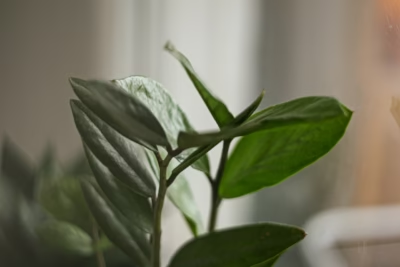
The ZZ plant (Zamioculcas zamiifolia) stores water in a thick underground rhizome and in its fleshy leaf stalks, and it copes with shade. Gasterias, small South African succulents such as Gasteria gracilis with its white-dotted leaves, also tolerate some shade, which is unusual among succulents.

Do succulents need direct sun?
Most succulents need direct sun: they grow best in the sunniest part of the home, with at least three hours of sunshine a day. A south-facing windowsill is ideal, and an east- or west-facing one is the minimum. Haworthias, gasterias, snake plants and ZZ plants are the exceptions that cope with less light.
Strong summer sun through glass can scorch the leaves, so behind a south-facing window in July and August, light shading, such as a net curtain, helps. A plant moved suddenly from shade into full sun can scorch too, so introduce it gradually. Succulents put outside for the summer should start in a sheltered, lightly shaded spot and move into more sun over the following weeks, out of the hottest midday sun at first.
Too little light shows in the shape of the plant: growth becomes weak, stretched and misshapen, and the leaves lose their colour. The answer is a brighter spot. Succulents also like fresh air. Good ventilation, especially in summer, helps them cope with the dry air of centrally heated homes and reduces fungal problems such as grey mould. Average room humidity suits them, and a bathroom is the wrong place for them.
How often should you water a succulent?
Water a succulent when its compost has dried, whatever the date. Check the compost first, and when the surface is dry to the touch, water thoroughly until water runs out of the drainage holes, let the pot drain for about ten minutes and never leave it standing in water. A thorough soak followed by a dry spell works better than frequent small sips, which lead to weak, distorted growth.
How often that happens depends on the season, the light, the size of the pot and the temperature. Succulents grow and drink most from spring to early autumn. During the winter rest, from November to early March in a cool room, water only enough to stop the plants shrivelling, or not at all, because water given at this time produces weak growth.
Rainwater at room temperature is best. Minerals from hard tap water build up over time and can leave white, chalky deposits on the leaves.
An underwatered succulent shrivels, its leaves wrinkle and its growth slows. An overwatered one has a soft stem and compost that never dries, its leaves may develop blisters, and when it is lifted from the pot, brown, collapsed roots pull away easily.
What compost and pot do succulents need?
Succulents need a gritty, free-draining compost that never becomes waterlogged. The simplest choice is a ready-mixed, peat-free cactus compost. Alternatively, mix peat-free John Innes No 2 with up to 30% horticultural grit or fine gravel by volume, or use two parts John Innes No 2 to one part grit or sharp sand. Large plants such as agaves need a heavier, soil-based compost to anchor their roots. A top dressing of grit or fine gravel finishes the pot. To check a mix, moisten a handful and squeeze it: a good one falls apart when you open your hand.
Use a pot with drainage holes, only slightly larger than the root ball. A pot that is too big holds more compost than the roots can use, and the compost stays wet long enough to cause rot. Most succulents have fibrous roots and grow well in shallow pots. Unglazed terracotta is porous, so the compost dries faster after watering, which helps anyone inclined to overwater, though it can dry out young offsets too much. A layer of gravel or crocks at the bottom of the pot does not improve drainage: water collects in the compost above it, which raises the saturated zone closer to the roots.
When should you repot and feed succulents?
Repot a succulent when its roots fill the pot or it has outgrown it, ideally in spring. Succulents grow well in a snug pot, so that usually means every four or five years, into a pot only slightly wider than the old one. Use dry compost, settle it by tapping the pot rather than pressing it down with your fingers, and wait at least two weeks before the first watering, longer if any roots were damaged or rotten. Spiny cacti are easiest to handle with a thick strip of folded newspaper wrapped around them as tongs, or with an oven glove.
Feed once a month from April to September with a high-potassium liquid fertiliser, such as tomato feed, or a specialist cactus feed. Succulents get no feed during the winter rest.
How do you overwinter succulents so they flower?
Most succulents rest from November to early March, and the rest is what makes them flower. Give them the brightest spot available with cooler conditions, ideally nights of only 8–10°C, water them barely or not at all, and stop feeding. Most succulents tolerate temperatures down to about 8°C, so a plant on a single-glazed windowsill that gets colder than that at night should move further into the room.
Water and warmth in winter, when the days are short and dull, produce weak, misshapen growth, so keep the plants as close to the light as possible. In a dark room a grow light helps: fluorescent tubes 15–30 cm above the plants, switched on for 14–16 hours a day.
A cool, dry rest combined with as much light as possible through the year stimulates flowering. The flowers are usually short-lived but brightly coloured. Cacti that flower most readily indoors include mammillarias, gymnocalyciums, lobivias and rebutias, whose flowers come in red, orange, pink, yellow and violet. The queen of the night (Selenicereus grandiflorus) opens large white flowers, up to about 22 cm long, for a single night, and they wither within hours.
Not every succulent follows this calendar. The Christmas cactus (Schlumbergera) flowers in winter, so it needs warmth and regular watering then, and rests in summer. Aeoniums and lithops also keep a calendar of their own, described with the plants above.
How do you propagate succulents?
Leaf cuttings work well for echeverias and jade plants. Twist a healthy leaf cleanly off the stem and leave it to dry for anything from a day to a week, until the wound has callused. Then lay it on a mix of two parts peat-free John Innes No 1 and one part horticultural grit, kept only slightly moist. Roots form within a few weeks, followed by a tiny new plant.
Rosette-forming succulents such as haworthias, aloes and houseleeks produce offsets, small plants around the base of the parent. Detach them once they have their own roots and pot them up separately in gritty compost. Houseleek offsets potted in spring take four to six weeks to establish, kept moist and out of direct sun. Branching and columnar plants are propagated from stem cuttings, which can start rooting about a week after planting once the cut end has dried. The same method renews a stretched plant: take the top as a cutting, let it callus and root it.
What are the most common succulent care mistakes?
Most succulents that die indoors are killed by water rather than pests. The mistakes behind most losses are:
- Watering little and often: frequent sips keep the compost damp and give weak, distorted growth.
- Watering during the winter rest: extra water in the cool months leads to weak growth and rot.
- A pot without drainage holes, or a pot left standing in water: trapped water rots the roots quickly.
- A pot that is too large: the extra compost stays wet.
- Too little light: stretched, pale, misshapen growth.
- A sudden move into full sun: scorched leaves.
- Cold and damp together: dieback and discoloured patches indoors, while for hardy succulents grown outside, winter wet is the main cause of losses.
Pests are less common. Mealybugs, small insects covered in white fluff, hide under the leaves and stems and at the base of leaf stalks. Remove them with a cotton bud dipped in alcohol and, if they return, use an insecticide labelled for mealybugs. Red spider mite thrives in hot, dry conditions, and scale insects, aphids and vine weevil also attack succulents, vine weevil mostly in pots. Badly infested plants are best kept away from the rest of the collection or thrown away.
A plant with rotting roots can sometimes be saved. Take it out of the pot, remove the brown, collapsed roots, repot it in dry, gritty compost and wait at least two weeks before watering. Bacterial soft rot cannot be treated, and an infected plant should be thrown away.
Are succulents poisonous to cats and dogs?
Some popular succulents are poisonous to cats and dogs, and others are safe. The ASPCA, the American animal welfare charity that runs an animal poison control centre, lists these as toxic to both:
- Desert rose (Adenium obesum): contains cardiac glycosides and can cause vomiting, diarrhoea, loss of appetite, depression, an irregular heartbeat and death.
- Aloe vera: vomiting, lethargy and diarrhoea.
- Jade plant (Crassula ovata): vomiting, depression and incoordination.
- Kalanchoe: vomiting and diarrhoea, and rarely an abnormal heart rhythm.
- Snake plant (Dracaena trifasciata): contains saponins and can cause nausea, vomiting and diarrhoea.
- ZZ plant: contains insoluble calcium oxalate crystals, which cause drooling, pawing at the mouth, vomiting and diarrhoea, and in rare cases throat swelling that makes breathing difficult.
The RHS classes euphorbias as harmful if eaten and as skin and eye irritants. It also lists agaves as skin irritants, Agave americana as harmful to pets if eaten, lace aloe as harmful if eaten and prickly pears (Opuntia) as skin and eye irritants. North Carolina State University’s extension service rates string of pearls as toxic to people and pets, though of low severity: eating the leaves can cause vomiting and diarrhoea, and the sap can irritate the skin. The same service lists lithops as non-toxic, and among the succulents the ASPCA lists as non-toxic to cats and dogs are the zebra haworthia and several echeverias, including hens and chickens (Echeveria elegans). If a pet has chewed a succulent, call a vet, and if it has trouble swallowing or breathing, take it to a veterinary hospital straight away.
How do you display succulents indoors?
A group of succulents looks best in a container just large enough to hold them all, or in an open terrarium. Mix rosettes, upright plants and trailing ones with leaves of different shapes and colours, and finish the surface with gravel or grit. A single large specimen, such as an aloe or a desert rose, can stand alone in a plain ceramic or concrete cover pot.
Whatever the cover pot, the plant itself should grow in a pot with drainage holes, and any water that collects in the cover pot after watering needs tipping out.

Which succulents can grow outdoors all year?
Only a few succulents come through a cold, wet winter outdoors. Most houseleeks (Sempervivum) are fully hardy, apart from some grey or hairy types, and so are stonecrops such as biting stonecrop (Sedum acre) and the ice plant (Hylotelephium spectabile, formerly Sedum spectabile), both rated H7 by the RHS, which means hardy below −20°C. Cooper’s ice plant (Delosperma cooperi) is rated H4, hardy to about −10°C, and among cacti, Opuntia fragilis grows further north than any other, up to 56°N in British Columbia.
Winter wet is the main killer of hardy succulents outdoors, so drainage decides whether they survive. Plant them in a scree or gravel garden, in a dry-stone wall or in troughs and other containers. For pots, mix equal parts sharp grit and John Innes No 2 and cover the surface with grit or slate. In wet regions, containers of grey or hairy houseleeks can go into a cold frame or under a sheet of Perspex for the winter.
Houseleeks flower in summer after two or three growing seasons. A stalk 15–20 cm tall rises from the centre of the rosette, which dies after flowering and is replaced by the young rosettes it has produced. Biting stonecrop has yellow, star-shaped flowers from May to July, the ice plant has pink flowers in late summer, and Cooper’s ice plant has glossy, purplish-pink, daisy-like flowers from mid to late summer.
Tender succulents stay in pots. Aeoniums and echeverias may survive outdoors in mild areas with protection from frost and wet, but bringing them in for the winter is safer. Agaves such as Agave americana and aloes such as lace aloe tolerate 1–5°C but not frost, so they spend the summer on a sunny terrace and the winter in a bright, frost-free room.
Succulent care – frequently asked questions
Can you plant different succulents in one pot?
Yes, as long as all of them need the same amount of light and water. A haworthia that prefers lower light and an echeveria that needs full sun will not both thrive in the same container.
Why are my succulent’s leaves turning red?
Red or purple leaves usually mean the plant is protecting itself from intense sun. It is a normal response, and a succulent left in the same bright spot gradually adapts to it.
Are succulents easy to care for?
Yes, once they are in the right place. Properly potted in gritty compost and kept in a bright spot, succulents need little maintenance indoors. What they do not tolerate is a dark corner or compost that stays wet.
Do succulents purify the air?
Not to any degree you would notice. In 2019 Michael Waring and Bryan Cummings of Drexel University reviewed a dozen studies from 30 years of research and calculated that matching the air exchange of a building’s ventilation, or of a couple of open windows, would take between 10 and 1,000 plants per square metre of floor.
Succulents need the brightest windowsill in the home in summer and a bright, cool spot in winter, so when a flat or house is being designed, it is worth planning deep sills or shelves by south-, east- or west-facing windows along with the lighting. Find architects, interior designers and interior photographers in the PLNDesign directory.
See also:
- Hydrangea care: pruning, planting, flower colour and winter care
- Boston fern care: light, water, humidity and common problems