

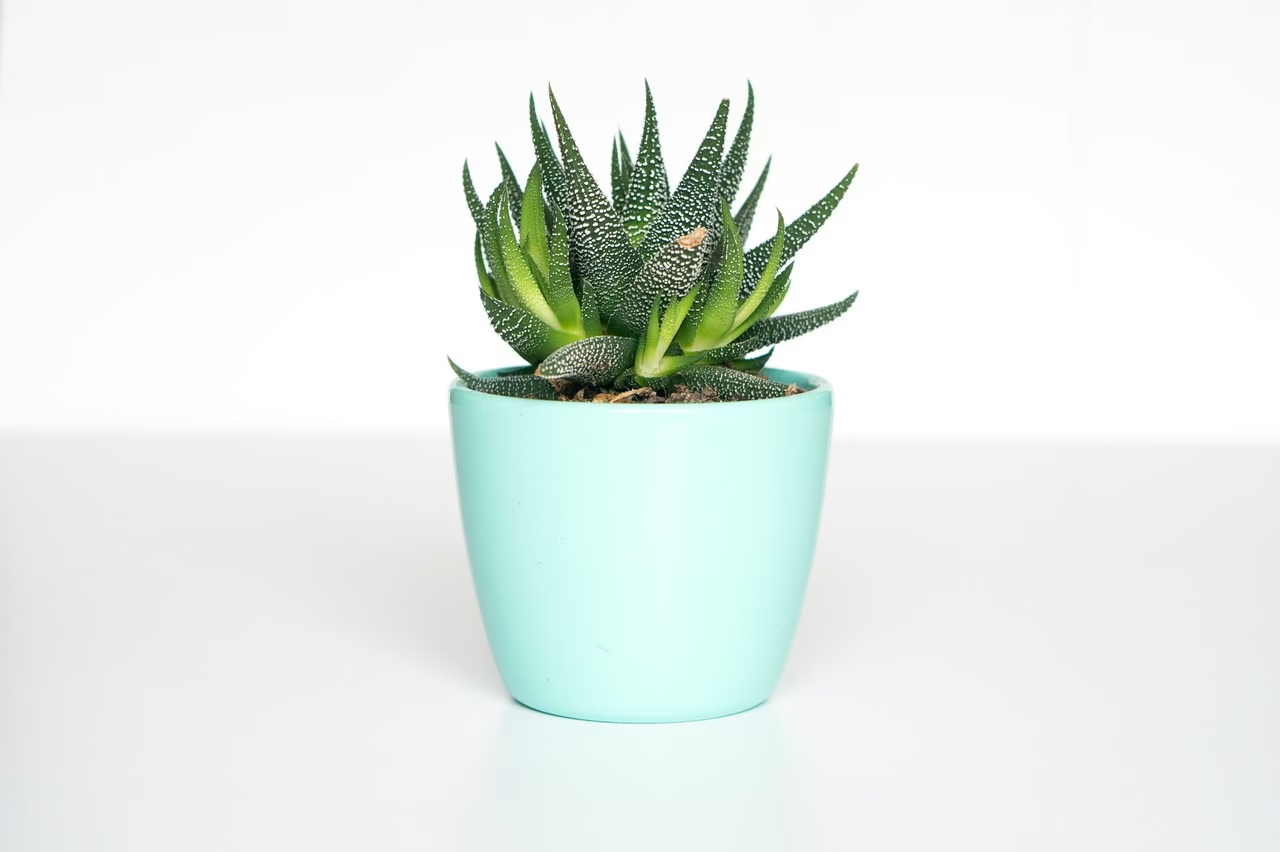
To clean houseplant leaves, wipe them with a soft cloth dampened in room-temperature water, rinse plants with lots of small leaves under a gentle lukewarm shower and lift dust off fuzzy leaves and cacti with a dry, soft brush. Clear water removes dust without harming the leaf, while washing-up liquid, household soap, vinegar and alcohol can damage it, and naturally glossy leaves regain their shine without any leaf shine product.
Cleaning houseplant leaves at a glance:
- Large, smooth leaves are wiped one at a time with a damp microfibre or cotton cloth, with the other hand supporting each leaf from below and both sides cleaned.
- Plants with many small leaves, such as ivy or weeping fig, are quicker to clean under a lukewarm shower, with the pot wrapped in a plastic bag first.
- Fuzzy leaves and cacti are cleaned dry with a soft brush and kept out of the shower, while smooth-leaved succulents can be wiped with a damp cloth.
- Washing-up liquid and household soap can strip the waxy cuticle that protects a leaf and leave it discoloured and brown, while plain water carries no such risk.
What is the best way to clean houseplant leaves?
The best way to clean most houseplant leaves is with clear, room-temperature water and a soft cloth. In nearly all cases this removes dust well and cannot damage the leaf, so nothing needs to be added to the water. A microfibre or cotton cloth, a soft sponge or a cotton pad all do the job, and for a large plant such as a monstera or a rubber plant a microfibre mitt worn on the hand speeds things up. Keep a cloth just for plants, because one that has been used on kitchen worktops can leave traces of detergent on the leaves. For some plants the temperature of the water matters too: cold water that lands on an African violet (Saintpaulia) marks its leaves with pale blotches and rings.

How do you clean large, smooth leaves?
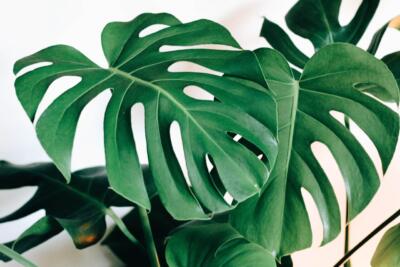
Wipe large, smooth leaves one at a time with a damp cloth, without pressing down. The method suits monstera (Monstera deliciosa), rubber plant (Ficus elastica), peace lily (Spathiphyllum) and bird of paradise (Strelitzia reginae). Rest each leaf on your other hand while you wipe, so the stalk does not snap and the veins are not damaged, then clean the underside as well, where dirt collects and pests often settle. Thin, small leaves tear more easily than thick ones, so they need a lighter touch. Rinse the cloth as you go and wash it thoroughly when you have finished, otherwise pests and diseases can travel from one plant to the next.
How do you clean a houseplant in the shower?
A shower suits plants with lots of small leaves that would take too long to wipe one by one, such as ivy (Hedera helix), weeping fig (Ficus benjamina) and spider plant (Chlorophytum comosum), as well as sturdier plants under a thick layer of dust, including palms and dracaenas. Wrap the pot in a plastic bag first so the compost does not get soaked and the roots do not start to rot. Stand the plant in the bath or shower tray, set the water to lukewarm and the spray to gentle before it reaches the leaves, then rinse the foliage from all sides. Do it early in the day so the leaves can dry before evening, and leave the plant to drip dry somewhere warm and shaded, away from draughts. Pat any leaves that stay wet for long with a dry microfibre cloth or kitchen paper.
Hard tap water leaves white limescale marks as it dries, and a soft cloth wipes them off. Where the water is very hard, stand the plant in the bath and spray it with rainwater or distilled water instead, as neither leaves limescale behind. Plants with hairy leaves stay out of the shower altogether, since water held among the hairs can make the leaves rot.
When should you dunk or spray a houseplant instead?
Small ferns with masses of tiny leaflets, such as a young Boston fern (Nephrolepis exaltata), are easier to dunk than to rinse. Secure the compost so it cannot fall out, turn the plant upside down and swish the foliage in a bowl of lukewarm water. Fern fronds are not wiped, as they are easily damaged.
Plants too big to carry to the shower, such as a banana plant (Musa), a large palm or a climber trained across a ceiling, can be sprayed with lukewarm water and wiped where they stand. Spraying will not do much for humidity: misting raises it only for a moment, because the water evaporates and disperses almost at once. Leaves that stay wet are also more prone to fungal disease, so spray only as much as the cleaning needs.

Which houseplants should not be cleaned with water?
Fuzzy and velvety leaves and cacti are best cleaned dry, with a soft paintbrush or a small feather duster. The fine hairs on a fuzzy leaf, called trichomes, reduce water loss and reflect strong light, and water trapped among them can leave marks. This group includes African violets, begonias with hairy leaves, pelargoniums (Pelargonium), Anthurium clarinervium and calatheas with velvety leaves. If a fuzzy leaf needs more than a brush, use a soft cloth barely dampened with room-temperature water and leave no drops behind.
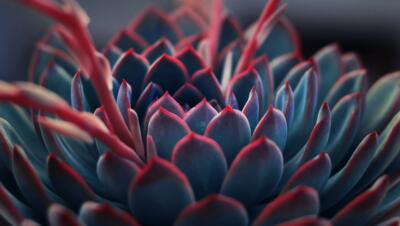
A soft brush also suits succulents with a waxy bloom or fine hairs, and plants that dislike getting wet, such as cyclamen (Cyclamen persicum), which grows from a half-exposed tuber that rots easily if water collects in the centre of the plant. Smooth-leaved succulents, such as the jade plant, can be wiped with a soft, damp cloth. On cacti, a brush keeps your fingers away from the spines.
What should you not use to clean plant leaves?
Do not clean leaves with washing-up liquid or household soap. Most of these products are detergents, and detergents can damage the waxy cuticle on the surface of the leaf, leaving it discoloured and brown. The cuticle is what stops a leaf losing too much water and keeps out fungi, bacteria and viruses. Vinegar and alcohol are phytotoxic, meaning they burn and injure leaves, so neither belongs on a plant. Clear water does the job on its own, so there is no need to add milk, beer or oil to it or to rub the leaves with banana peel.
Insecticidal soaps and other pest treatments are pesticides. They are used only against pests and exactly as the label directs, never as a routine leaf cleaner.
How do you make houseplant leaves shine?
Glossy leaves shine again once the dust is washed off, so a clean, damp cloth is all most plants need. A leaf shine product is optional, and its label limits where it can go: leaf shine sprays are not meant for hairy, young or tender leaves, ferns, cacti, succulents or yuccas, and should be kept off flowers and buds. Spray only the upper surface of the leaf and try a new product on a single leaf first. Flowering plants such as orchids are best cleaned without it.
Why does dust on leaves harm a houseplant?
A layer of dust cuts the light reaching the leaf and slows photosynthesis, and fine particles can also block the stomata, the pores through which a leaf exchanges gases and releases water vapour. Over time a dusty plant grows more slowly. Dusty conditions also favour spider mites, which is one reason regular cleaning helps keep insects and mites in check.
Cleaning doubles as an inspection. Fine pale mottling on the upper side of the leaves and, in heavier attacks, silky webbing are signs of red spider mite. Fluffy white wax in the leaf joints hides mealybugs, and sticky honeydew on the leaves points to sap-feeding pests. This is also the moment to cut off yellow, dead or damaged leaves with clean secateurs and to pick fallen leaves off the compost, because dead material can harbour pests and their eggs. Small infestations can often be wiped away, so a thorough wipe of both sides of the leaves is the first step at the first sign of trouble.

How often should you clean houseplant leaves?
Clean houseplant leaves whenever they look dull or you can see a film of dust on them, rather than to a fixed timetable. How quickly that happens depends on how much dust settles in the room, so plants in some rooms need attention far more often than others. Clean leaves matter most in autumn and winter, when the days are short and dust takes a bigger share of the little light that reaches the plant. More on looking after plants through the darker months is in our guide to houseplant care in winter.
Cleaning houseplant leaves – frequently asked questions
Can you use alcohol wipes to clean plant leaves?
No. Alcohol is phytotoxic and can burn the leaf, so wipes soaked in it are not suitable for cleaning. A cloth dampened with plain water is enough.
Should you clean a new houseplant?
Yes. Pests most often reach a home on newly bought plants, so wipe or shower the leaves of a new plant and keep it away from the rest of your collection until you are sure it is free of pests.
How do you clean ZZ plant leaves?
The ZZ plant (Zamioculcas zamiifolia) has smooth, glossy leaves, so it is cleaned like other smooth-leaved plants, with a soft, damp cloth and each leaf supported from below. Its full care routine is in our ZZ plant care guide.
Can you clean orchid leaves?
Yes. Wipe the leaves of a moth orchid (Phalaenopsis) with a soft cloth dampened with room-temperature water, and make sure no water is left in the crown, the centre where the leaves meet, as standing water there can cause rot. Watering and reblooming are covered in our orchid care guide.
A large plant that cannot be carried to the shower is cleaned where it stands, so leaving room to reach every leaf is worth considering when you plan where plants go in a room. Find architects, interior designers and interior photographers in the PLNDesign directory.
See also:
- Spring houseplant care: light, watering, feeding and repotting
- Peace lily care: light, watering, feeding and common problems